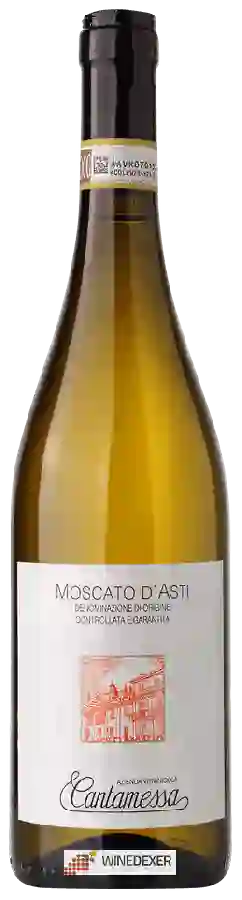
Winery CantamessaMoscato d'Asti
 Sparkling wine


In the mouth this sparkling wine is a .
This wine generally goes well with fruity desserts and aperitif.

Taste structure of the Moscato d'Asti from the Winery Cantamessa
Light | Bold | |
Soft | Acidic | |
Gentle | Fizzy |
In the mouth the Moscato d'Asti of Winery Cantamessa in the region of Piedmont is a .
Food and wine pairings with Moscato d'Asti
Pairings that work perfectly with Moscato d'Asti


Original food and wine pairings with Moscato d'Asti
The Moscato d'Asti of Winery Cantamessa matches generally quite well with dishes of fruity desserts or aperitif such as recipes of rice with milk or seed crackers.
Details and technical informations about Winery Cantamessa's Moscato d'Asti.
Discover the grape variety: Plavina
Supple, fruity reds with a clear ruby colour, smooth tannins and an airy, fresh palate; signature aromas of red fruits (cherry, raspberry), Mediterranean herbs (thyme, rosemary) and Dalmatian garrigue notes. Also as fresh, easy-drinking Croatian rosés. Often blended with Plavac Mali for accessible Dalmatian reds. Indigenous Croatian black grape, grown on the Dalmatian coast, mainly in Central Dalmatia.
Last vintages of this wine

The best vintages of Moscato d'Asti from Winery Cantamessa are 2016, 0
Informations about the Winery Cantamessa
The Winery Cantamessa is one of of the world's greatest estates. It offers 11 wines for sale in the of Moscato d'Asti to come and discover on site or to buy online.

The wine region of Moscato d'Asti
Piedmontese DOCG of the Langhe and Monferrato, the Italian festive wine par excellence. Signature Moscato Bianco (white Muscat à petits grains): a lightly sparkling sweet white (~5. 5% alcohol, 1 bar) with intense signature notes of white peach, fresh apricot, orange blossom, sage, honey and muscaty grape, a fine bubble and lively sugar strung by a crisp acidity — light and delicate. Asti method with interrupted fermentation.
The wine region of Piedmont
Kingdom of Nebbiolo: Barolo and Barbaresco DOCG, long-ageing reds with firm tannins and lively acidity, complex aromas of withered rose, sour cherry, tar, truffle and undergrowth. More accessible, tangy Barbera on red fruit, supple, crisp Dolcetto. Sweet, floral sparkling Moscato d'Asti, mineral, lemony Gavi (Cortese) white, round, almondy Arneis from Roero. 50,000 ha across the Langhe, Roero and Monferrato, UNESCO.
The word of the wine: Sweet
Generic term for wines containing residual sugar (natural sugars in the grapes that have not been transformed into alcohol). It is also used to describe a wine with a dominantly sweet flavour, without further explanation.


