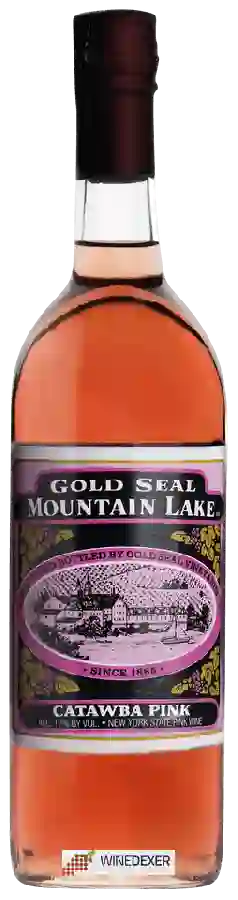
Winery Gold Seal VineyardsMountain Lake Catawba Pink
 wine
wine
This wine generally goes well with
The Mountain Lake Catawba Pink of the Winery Gold Seal Vineyards is in the top 0 of wines of Finger Lakes.

Details and technical informations about Winery Gold Seal Vineyards's Mountain Lake Catawba Pink.
Discover the grape variety: Léon Millot
Coloured, fruity reds with a dense purple robe, supple tannins and fresh acidity, showing aromas of black cherry, blackberry, plum, blackcurrant, sweet spices and earthy, slightly foxy notes. Round palate, best drunk young. Very cold- and disease-resistant interspecific variety, driving northern vineyards: Canada (Quebec, Ontario, Nova Scotia), the US North-East and England. Hybrid created in 1911 by Eugène Kuhlmann in Alsace, full sibling of maréchal foch.
Last vintages of this wine



The best vintages of Mountain Lake Catawba Pink from Winery Gold Seal Vineyards are 0
Informations about the Winery Gold Seal Vineyards
The Winery Gold Seal Vineyards is one of of the world's greatest estates. It offers 9 wines for sale in the of Finger Lakes to come and discover on site or to buy online.

The wine region of Finger Lakes
Quality hub of the American northeast, signature Riesling: dry, lively, mineral whites with notes of green apple, lemon, white peach and wet stone, sharp acidity comparable to the best Germans. Also off-dry and sweet botrytised versions. Precise Chardonnay, fine, fresh Pinot Noir (red fruits), peppery Cabernet Franc. Continental climate tempered by 11 glacial lakes (Cayuga, Seneca).
The wine region of New York
America's 3rd wine state by volume, striking diversity. Finger Lakes the signature: cool-climate Riesling, dry to off-dry, mineral and lively with notes of lime, apple, evolving petrol and white flowers — a US benchmark. Warmer Long Island for peppery Cabernet Franc and supple Merlot. Hudson Valley (Seyval, Vidal).
The word of the wine: Yeast
Micro-organisms at the base of all fermentative processes. A wide variety of yeasts live and thrive naturally in the vineyard, provided that treatments do not destroy them. Unfortunately, their replacement by laboratory-selected yeasts is often the order of the day and contributes to the standardization of the wine. Yeasts are indeed involved in the development of certain aromas.


