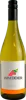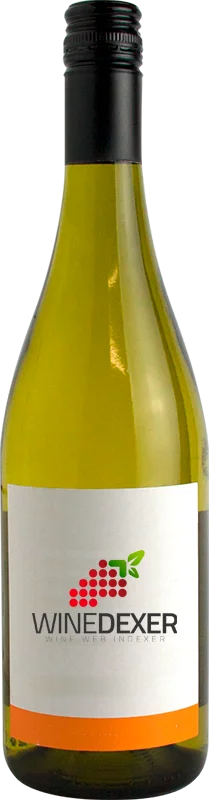
Winery BessacPineau Des Charentes Philippe Lalande
 White wine
This wine generally goes well with
Details and technical informations about Winery Bessac's Pineau Des Charentes Philippe Lalande.
Discover the grape variety: Meslier Saint François
Meslier Saint François is a French grape variety that comes from the Gatinais, located south of the Paris basin. It was obtained from a cross between Chenin and Gouais Blanc. It is planted on a surface area of 50 ha in France and is often confused with Arbois, hence the synonym it shares with the latter, Orbois. Its berries and clusters are of normal size. Its adult leaves have convex teeth. Meslier Saint François is not very vigorous, but it remains fertile. It buds early, 3 days before Chasselas. It is often exposed to spring frosts and is susceptible to oidium and grey rot. Meslier Saint François produces flat, light wines with little alcohol. When distilled, its eaux de vie are full of bouquet and fine. It can thus be used in the blending of grape varieties that produce cognac or armagnac.
Informations about the Winery Bessac
The Winery Bessac is one of of the world's greatest estates. It offers 3 wines for sale in the of Cognac to come and discover on site or to buy online.

The wine region of Cognac
Cognac is the most famous brandy in the world, more famous even than its OldGascon cousin, Armagnac. It comes from the Charentais, a vast region of western France immediately North of Bordeaux, and takes its name from the historic town of Cognac - the long-standing epicentre of local brandy production. In French, cognac is technically classified as an eau-de-vie de vin - a category that covers all spirits distilled from wine. The Full and official name of the brandy is actually "Eau-de-Vie de Cognac" or "Eau-de-Vie des Charentes", but the Short version has become so common that these longer versions almost never appear on labels.
The word of the wine: Drawing (liqueur de)
In champagne and sparkling wines of traditional method, addition to the wine, at the time of bottling (tirage) of sugars and yeasts dissolved in wine. These components will provoke the second fermentation in the bottle leading to the formation of carbon dioxide bubbles.