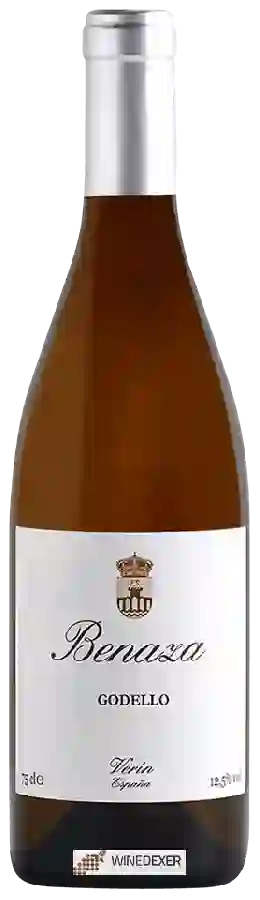
Winery BenazaGodello
 White wine



This wine generally goes well with

Wine flavors and olphactive analysis




On the nose the Godello of Winery Benaza in the region of Galice often reveals types of flavors of earth, microbio or oak and sometimes also flavors of tree fruit, citrus fruit.
Details and technical informations about Winery Benaza's Godello.
Discover the grape variety: Riesling Italico
Lively, aromatic whites for early drinking, with a pale golden hue, light palate and fresh aromas of citrus (lemon), white flowers, white-fleshed fruits (green apple) and herbal notes. Also produced as sparkling (Spumante) and botrytised sweet wines. A pillar of dry Italian whites from Friuli, Veneto and Lombardy. The Italian synonym for Welschriesling, a Central European white grape with no genetic link to German Riesling.
Last vintages of this wine
The best vintages of Godello from Winery Benaza are 2015, 2012, 0, 2013
Informations about the Winery Benaza
The Winery Benaza is one of of the world's greatest estates. It offers 2 wines for sale in the of Monterrei to come and discover on site or to buy online.

The wine region of Monterrei
Galician DO south-east of Ourense on the Portuguese border, micro-climate blending continental and Atlantic. Godello is the signature white king: structured and taut with green apple, pear, citrus, white flowers, honey, almond and a mineral touch, ample and long palate — one of the greatest Galician whites. Floral Treixadura, lively Doña Blanca. Mencía is the flagship red: juicy and fresh (raspberry, cherry, violet, pepper, graphite), fine tannins.
The wine region of Galice
Oceanic northwest Spain, cradle of the great Iberian whites. Signature Albarino of Rias Baixas: lively, saline whites with signature notes of citrus, white peach, white flowers, fresh almond and iodine minerality, a taut palate — a perfect match for Atlantic seafood. Also premium Godello (pear, citrus, butter), aromatic Treixadura. Supple Mencia reds (raspberry, herbs, graphite).
The word of the wine: Tartar (deposit)
White, chalky deposits that occur as a result of precipitation inside bottles and are often considered by consumers as a defect. They are in fact tartaric salts formed by tartaric acid, potassium and calcium naturally present in the wine. This deposit does not alter the quality of the wine and can be eliminated by a simple decanting.


