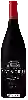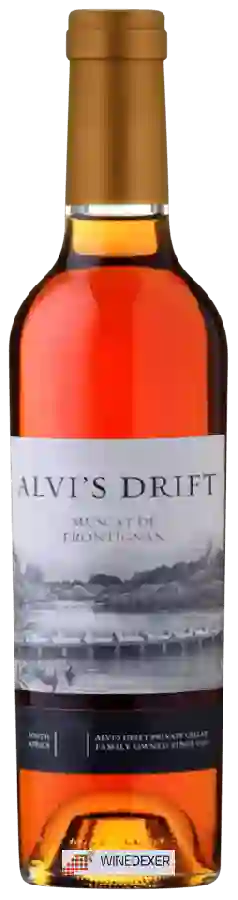
Winery Alvi's DriftMuscat de Frontignan
 Natural sweet wine


This wine generally goes well with
The Muscat de Frontignan of the Winery Alvi's Drift is in the top 30 of wines of Worcester.

Wine flavors and olphactive analysis




On the nose the Muscat de Frontignan of Winery Alvi's Drift in the region of Western Cape often reveals types of flavors of non oak, earth or microbio and sometimes also flavors of oak, tree fruit or spices.
Details and technical informations about Winery Alvi's Drift's Muscat de Frontignan.
Discover the grape variety: Grand Noir de la Calmette
Very deeply coloured reds with a profound purple robe, moderate tannins and an ample palate, with simple aromas of black fruits (blackberry, blackcurrant) and inky notes. A teinturier profile with red flesh. Formerly planted massively in the Midi to reinforce blend colour, now marginal, still grown in the Languedoc, Spain and South America. A French teinturier black grape bred in 1855 by Henri Bouschet (aramon × petit bouschet).
Last vintages of this wine

The best vintages of Muscat de Frontignan from Winery Alvi's Drift are 2012, 2010, 0, 2017 and 2014.
Informations about the Winery Alvi's Drift
The Winery Alvi's Drift is one of of the world's greatest estates. It offers 43 wines for sale in the of Worcester to come and discover on site or to buy online.

The wine region of Worcester
South African district in the Breede River Valley (100 km west of Cape Town, sandy rocky soils, ~25% of national production): Chenin Blanc, Colombard and Sauvignon Blanc are the flagship whites — accessible and expressive profile. Shiraz is the flagship red: deep and robust with dark fruits (blackberry, plum, black cherry) and spicy complexity. Pinotage and Cabernet Sauvignon as complements. Nearly half of South Africa's Sémillon and a third of its Ruby Cabernet originate here.
The wine region of Western Cape
Cradle of South African wine. Signature Chenin Blanc (Steen, 20%) in ample, fresh whites with notes of quince, yellow apple, honey and acacia flower, from crisp dry to sweet. Sharp, iodised Sauvignon Blanc (Walker Bay, Constantia), balanced Chardonnay. Reds: emblematic Pinotage with roasted aromas (coffee, plum, smoke), firm Cabernet Sauvignon, spicy Syrah.
The word of the wine: Disgorging (champagne)
This is the evacuation of the deposit formed by the yeasts during the second fermentation in the bottle, by opening the bottle. The missing volume is completed with the liqueur de dosage - a mixture of wine and cane sugar - before the final cork is placed. For some years now, some producers have been replacing this sugar with rectified concentrated musts (concentrated grape juice) which give excellent results. A too recent dosage (less than three months) harms the gustatory harmony of the champagne.