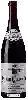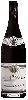
Winery Alain JeannieGevery-Chambertin
 Red wine
This wine generally goes well with poultry, beef or veal.
Food and wine pairings with Gevery-Chambertin
Pairings that work perfectly with Gevery-Chambertin



Original food and wine pairings with Gevery-Chambertin

The Gevery-Chambertin of Winery Alain Jeannie matches generally quite well with dishes of beef, veal or game (deer, venison) such as recipes of cabri en colombo with creole sauce, veal escalope with marsala or rabbit, cabbage, bacon.
Details and technical informations about Winery Alain Jeannie's Gevery-Chambertin.
Discover the grape variety: Molinara
Its origin is not very precise, it has been cultivated for a very long time in northern Italy, ... in France it is almost unknown. It should not be confused with the Spanish variety molinera gorda.
Informations about the Winery Alain Jeannie
The Winery Alain Jeannie is one of of the world's greatest estates. It offers 1 wines for sale in the of Côte de Nuits to come and discover on site or to buy online.

The wine region of Côte de Nuits
The Côte de Nuits is the northern half of the Côte d'Or wine region in Burgundy (the Southern half being the Côte de Beaune). It specializes in red wines made from Pinot noir grapes, the most famous and expensive of which come from the grand crus of Vosne-Romanée and Chambolle-Musigny. About 95% of all wines produced in the Côte de Nuits are made from a single grape variety: Pinot Noir. The district is widely regarded as the spiritual home of Pinot Noir, a reputation strongly reinforced by such high quality wines as the Grand Cru Romanée-Conti.
The wine region of Burgundy
Bourgogne is the catch-all regional appellation title of the Burgundy wine region in eastern France ("Bourgogne" is the French name for Burgundy). Burgundy has a Complex and comprehensive appellation system; counting Premier Cru and Grand Cru titles, the region has over 700 appellation titles for its wines. Thus, Burgundy wines often come from one Vineyard (or several separate vineyards) without an appellation title specific to the region, Village or even vineyard. A standard Burgundy wine may be made from grapes grown in one or more of Burgundy's 300 communes.
The word of the wine: Maturing (champagne)
After riddling, the bottles are stored on "point", upside down, with the neck of one bottle in the bottom of the other. The duration of this maturation is very important: in contact with the dead yeasts, the wine takes on subtle aromas and gains in roundness and fatness. A brut without year must remain at least 15 months in the cellar after bottling, a vintage 36 months.