Wines made from Syrah grapes of Vinos de Pago
Discover the best wines made with Syrah as a single variety or as a blend of Vinos de Pago.
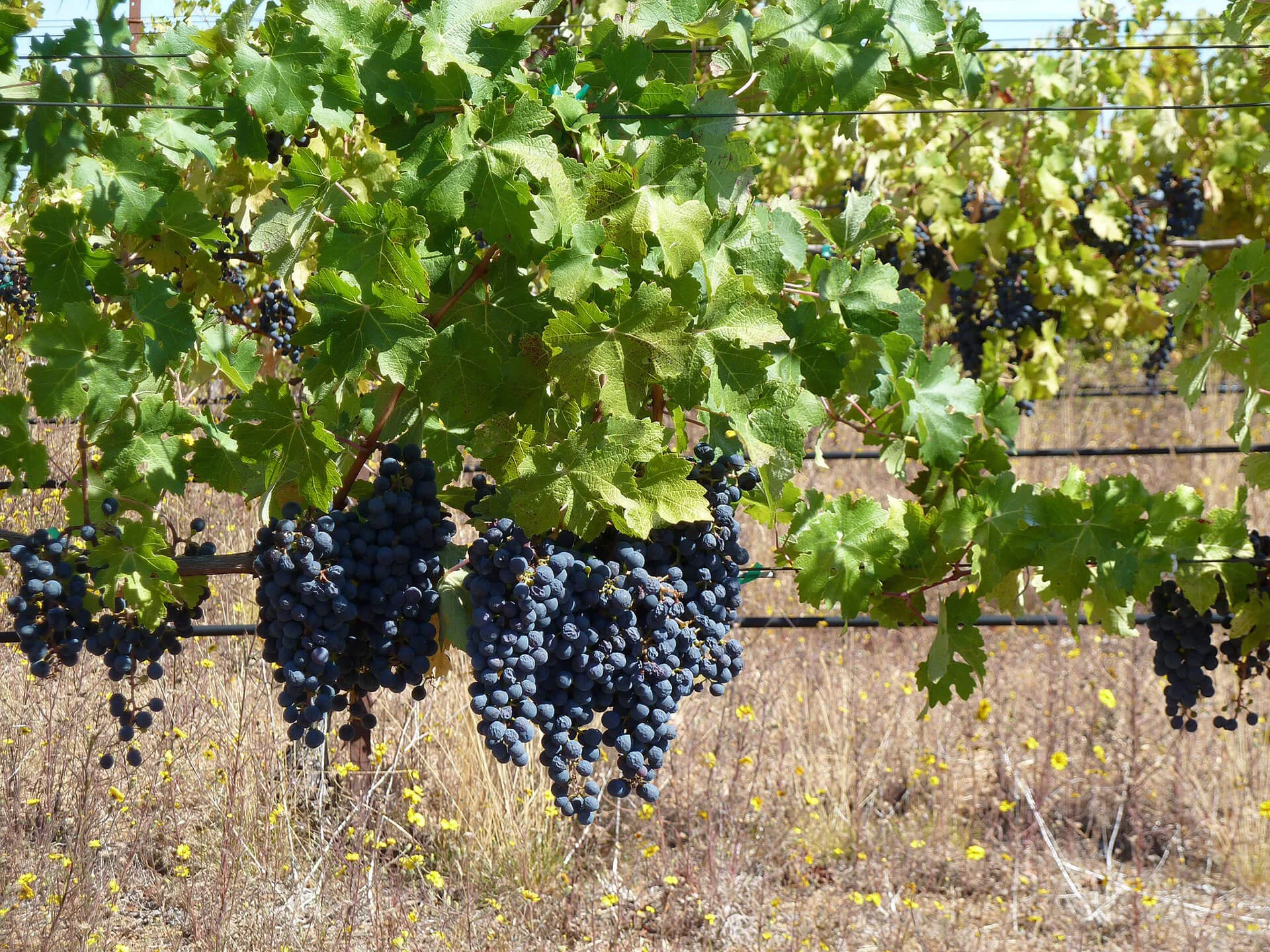
No one can agree on the origin of Syrah, the black grape variety found today in the Rhône Valley, Provence, Languedoc-Roussillon and southwestern France. Several legends speak of its possible origin in Sicily, Persia or Syria. Tests have finally revealed that it originated in the northern Côtes du Rhône valley. Syrah is a fragile grape variety, which fears drought and is susceptible to disease. Its long shoots are not very resistant to the mistral, which is why they are often tied up or cut short. It needs soil rich in trace elements to feed itself. In these conditions, it produces bunches of beautiful bluish-black grapes with medium-sized berries and sweet, spicy juice. Its red wines are deep in colour, with fruity, spicy and floral aromatic complexity and tannins that structure the whole. With little acidity, they are rather full-bodied and have a high alcohol content. Syrah also makes fruity rosé wines, which are pleasant and have a nice finesse.vinified on its own, Syrah is the only red grape variety of the AOC Cornas and is the majority in the AOC Côte-Rôtie and Hermitage. It is also recommended in the Côtes-du-Vallée du Rhône, Saint-Joseph and Châteauneuf-du-Pape appellations. Finally, the AOCs Palette, Baux-de-Provence, Corbières, Côtes-du-Roussillon, Fronton... also produce it. Today, Syrah is a grape variety that is constantly increasing in surface area throughout the world. It is growing in Italy, Australia, South Africa, Argentina and Mexico.
Vinos de Pago, often abbreviated to VP, is a relatively New category of wine classification in Spain. It was introduced in 2003, to cover individual wineries whose wines fell outside the existing DO system (geographically or stylistically) but were nevertheless of consistently high quality. As of 2017, there were more than a dozen VPs, all of which are notable exceptions in regions not generally associated with high quality wines. More than half are in Castilla-La Mancha, and the rest in Navarra and Utiel-Requena.