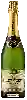
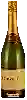
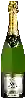
Wines made from Colombard grapes of Crémant de Bourgogne
Discover the best wines made with Colombard as a single variety or as a blend of Crémant de Bourgogne.
Colombard is one of the oldest grape varieties in the Charentes. This golden white grape variety is a cross between Chenin and Gouais. The young leaves of colombard are yellow with bronze patches. The adult leaves may be three-lobed or whole, depending on the variety. Its branches are cottony. The bunches of this variety are thick and cylindrical. Its elliptical berries are medium-sized. They change color until they ripen, ranging from greenish white to golden yellow. Colombard is associated with an average budding. It is particularly susceptible to leafhoppers, grape worms, mites, mildew, powdery mildew and gray mold. It is also sensitive to water stress, but is not very sensitive to wind. It ripens late in the second half of the year. There are a dozen approved clones of Colombard, the best known of which are 608, 607 and 606. This variety produces a full-bodied, fine white wine. Aromas of lime, nectarine, boxwood, citrus and exotic fruits are released.
Recognized in 1975, the appellation crémant-de-bourgogne replaced the Sparkling wines whose quality was not very homogeneous. Its geographical area, very vast, covers more than 300 communes, of Châtillonnais, with the borders of Champagne auboise, with Beaujolais included. The AOC imposes conditions of harvest and elaboration as strict as those of the Champagne region and copied on this one, the difference residing in the duration of Maturation on lees, which is of nine months minimum, against twelve for the champagne. The Grape varieties used also bring Crémant-de-Bourgogne closer to its illustrious Champagne model, for although all the varieties of the region can be used, Pinot Noir and Chardonnay are favoured.