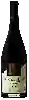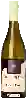
WillaKenzie EstateClairière Pinot Noir
 wine
wine
This wine generally goes well with
The Clairière Pinot Noir of the WillaKenzie Estate is in the top 0 of wines of Yamhill-Carlton District.

Details and technical informations about WillaKenzie Estate's Clairière Pinot Noir.
Discover the grape variety: Noah
Simple, rustic whites with a characteristic foxy taste, a pale golden robe, a direct palate and moderate acidity. Signature labrusca aromas of English candy, wild strawberry, fresh grape and vivid herbaceous notes. Distinctive heritage profile. Still found on heritage trellises in the Cévennes and northern Italy; commercially banned in France since 1935. American hybrid white grape derived from Vitis labrusca, obtained around 1869 in Illinois.
Last vintages of this wine


The best vintages of Clairière Pinot Noir from WillaKenzie Estate are 0
Informations about the WillaKenzie Estate
The WillaKenzie Estate is one of of the world's great estates. It offers 35 wines for sale in the of Yamhill-Carlton District to come and discover on site or to buy online.

The wine region of Yamhill-Carlton District
Premium AVA of the Willamette Valley (Oregon) southwest of Portland: Pinot Noir reigns in red (~70%) — deep ruby robe with signature notes of blackberry, raspberry, clove, tobacco, coffee and a floral spice touch, silky and broad tannins, fleshy textured profile from a warmer mesoclimate. Pinot Gris and Chardonnay as racy complements. AVA (2005), oldest marine sedimentary loam-sandy soils of the valley, slopes 60-300 m south-facing.
The wine region of Oregon
American benchmark for fresh, elegant Pinot Noir. Fine, silky reds with signature notes of red cherry, raspberry, wild strawberry, undergrowth and spice, delicate tannins and taut freshness — the closest style to Burgundy outside France. Iconic Willamette Valley on volcanic (Jory) and marine soils. Also precise, mineral Chardonnay, ample Pinot Gris (pear, honey), taut Riesling.
The word of the wine: Density per hectare
Number of vines per hectare. For the same yield, a vine planted with 3,000 vines per hectare bears many more bunches (per vine) than a vine planted with 10,000. The grapes will therefore be less rich in sugar and polyphenols (tannins, aromas...).