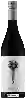
Winery WildflowerSauvignon Blanc
 White wine



In the mouth this white wine is a with a nice freshness.
This wine generally goes well with vegetarian, shellfish or goat cheese.

Taste structure of the Sauvignon Blanc from the Winery Wildflower
Light | Bold | |
Dry | Sweet | |
Soft | Acidic |
In the mouth the Sauvignon Blanc of Winery Wildflower in the region of Australie de l'Ouest is a with a nice freshness.
Food and wine pairings with Sauvignon Blanc
Pairings that work perfectly with Sauvignon Blanc



Original food and wine pairings with Sauvignon Blanc
The Sauvignon Blanc of Winery Wildflower matches generally quite well with dishes of shellfish, vegetarian or goat cheese such as recipes of mussels with bleu de bresse, quiche lorraine or spinach, goat cheese and salmon quiche.
Details and technical informations about Winery Wildflower's Sauvignon Blanc.
Discover the grape variety: Portugais bleu
Supple, fruity reds to drink young, with a clear ruby colour, silky tannins and an airy palate with moderate acidity, featuring aromas of red fruits (cherry, raspberry) and light floral notes. Early-ripening and productive. Also used in the characteristic Austrian Schilcher rosés. The pillar of light, easy-drinking reds in Central Europe (Austria, Germany, Hungary, Czech Republic). French synonym for Blauer Portugieser.
Last vintages of this wine
The best vintages of Sauvignon Blanc from Winery Wildflower are 2019, 2018, 0
Informations about the Winery Wildflower
The Winery Wildflower is one of of the world's greatest estates. It offers 6 wines for sale in the of Australie de l'Ouest to come and discover on site or to buy online.

The wine region of Australie de l'Ouest
Australian premium on Margaret River. Signature Bordeaux Cabernet-Merlot blends in red: deep and refined with notes of ripe blackcurrant, eucalyptus, cedar and graphite, firm tannins and great ageing, often compared to Médoc. Chardonnay rated Australia's best: taut, saline and mineral (lemon, hazelnut, brioche). Lively Sauvignon-Sémillon (citrus, cut grass).
The word of the wine: Density per hectare
Number of vines per hectare. For the same yield, a vine planted with 3,000 vines per hectare bears many more bunches (per vine) than a vine planted with 10,000. The grapes will therefore be less rich in sugar and polyphenols (tannins, aromas...).