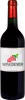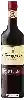
Weingut BornHöhnstedter Kreisberg Graf Mansfeld Trocken
 Red wine
This wine generally goes well with vegetarian
Food and wine pairings with Höhnstedter Kreisberg Graf Mansfeld Trocken
Pairings that work perfectly with Höhnstedter Kreisberg Graf Mansfeld Trocken

Original food and wine pairings with Höhnstedter Kreisberg Graf Mansfeld Trocken
The Höhnstedter Kreisberg Graf Mansfeld Trocken of Weingut Born matches generally quite well with dishes of vegetarian such as recipes of goat cheese and bacon quiche.
Details and technical informations about Weingut Born's Höhnstedter Kreisberg Graf Mansfeld Trocken.
Discover the grape variety: Petit Manseng
Petit Manseng is a white grape variety of Pyrenean origin. Its small berries have a hard, well-ventilated skin, which allows Petit Manseng to resist grey rot. On the other hand, this variety is very sensitive to noble rot, which concentrates the aromas and makes it possible to produce remarkable sweet wines with flavours of exotic fruits, grapefruit, honey, gingerbread, etc. Rich in alcohol and acidity, these wines are very well balanced and very fine. petit manseng also produces fruity dry white wines. It is also used in the AOC Béarn, Jurançon, Pacherenc-du-Vic-Bilh, Tursan...
Informations about the Weingut Born
The Weingut Born is one of of the world's greatest estates. It offers 29 wines for sale in the of Saale-Unstrut to come and discover on site or to buy online.

The wine region of Saale-Unstrut
Saale-Unstrut is the northernmost of Germany's 13 wine-growing regions. At 51 degrees northern latitude, it is one of the most northerly wine regions in the world. It takes its name from the two rivers on the banks of which the Vines of the region grow, and is composed of three non-contiguous Parts located mainly in the federal state of Saxony-Anhalt, with around 650 hectares (1600 acres) of Vineyards, often terraced, on South and south-west-facing slopes along the narrow river valleys. A smaller area of 20 hectares (50 acres) is located in the state of Thüringen and a block of just 7 hectares (17 acres) in Brandenburg.
The word of the wine: Sulphating
Treatment, formerly practiced with copper sulfate, applied to the vine to prevent cryptogamic diseases.