The Winery Vaza of Rioja
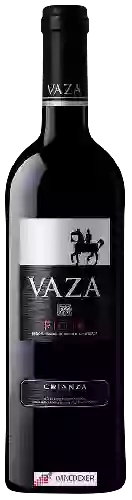
The Winery Vaza is one of the best wineries to follow in Rioja.. It offers 4 wines for sale in of Rioja to come and discover on site or to buy online.

Looking for the best Winery Vaza wines in Rioja among all the wines in the region? Check out our tops of the best red, white or effervescent Winery Vaza wines. Also find some food and wine pairings that may be suitable with the wines from this area. Learn more about the region and the Winery Vaza wines with technical and enological descriptions.
How Winery Vaza wines pair with each other generally quite well with dishes of beef, lamb or veal such as recipes of tournedos rossini, lamb shoulder confit with harissa or sliced endives with ham.
On the nose the red wine of Winery Vaza. often reveals types of flavors of oaky, vanilla or non oak and sometimes also flavors of earth, oak or spices. In the mouth the red wine of Winery Vaza. is a powerful with a nice balance between acidity and tannins.
Rioja, in northern Spain, is best known for its berry-flavored, barrel-aged red wines made from Tempranillo and Garnacha. It is probably the leading wine region in Spain. It is certainly the most famous, rivaling only Jerez. The Vineyards follow the course of the Ebro for a hundred kilometres between the towns of Haro and Alfaro.
Besides Tempranillo and Garnacha, Graciano and Mazuelo (Carignan) are also used in Rioja's red wines. Some wineries, notably Marqués de Riscal, use small amounts of Cabernet Sauvignon. White grapes are planted much less. In 2017, the vineyard area was recorded at 64,215 hectares (158,679 acres).
Planning a wine route in the of Rioja? Here are the wineries to visit and the winemakers to meet during your trip in search of wines similar to Winery Vaza.
It is said to be a natural interspecific cross between a vitis vinifera and a vitis labrusca, the isabelle variety being a better known example. It was discovered by Gérard Van Tol Boskoop and imported into Germany by Günter Pfeiffer. It can also be found in the Netherlands, Belgium and England, where it is commonly grown in greenhouses. We noted that the schuyler looks somewhat like the Boskoop glory even if the origins, each time put forward, are quite different, to be followed!