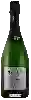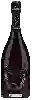
Winery Tott'sGold Medal Cuvée Extra Dry Champagne
 wine
wine
This wine generally goes well with
The Gold Medal Cuvée Extra Dry Champagne of the Winery Tott's is in the top 0 of wines of Champagne.
Details and technical informations about Winery Tott's's Gold Medal Cuvée Extra Dry Champagne.
Discover the grape variety: Carignan
Mainly cultivated in the Languedoc region, carignan originates from Spain. Because of its very resistant branches, it is often called hardwood. Its bunches are quite large. They are compact and winged with a lignified stalk. The berries are spherical in shape and take on a bluish-black colour. Carignan has a total of 25 approved clones, the best known of which are 274, 65 and 9. The carignan buds at the beginning of June and is protected from spring frosts. It does not reach maturity until the third period. Also, this grape variety needs warmth and sunshine. It appreciates dry and not very fertile soils. Carignan vines can live for more than 100 years. Those that are more than 30 years old produce a better wine. This wine is well coloured. It is generous and powerful at the same time. Pepper, cherry, blackberry, banana, raspberry, almond, prune and violet are some of the aromas that this grape variety gives off.
Informations about the Winery Tott's
The Winery Tott's is one of of the world's greatest estates. It offers 5 wines for sale in the of Champagne to come and discover on site or to buy online.

The wine region of Champagne
Champagne is the name of the world's most famous Sparkling wine, the appellation under which it is sold and the French wine region from which it comes. Although it has been used to refer to sparkling wines around the world - a point of controversy and legal wrangling in recent decades - Champagne is a legally controlled and restricted name. See the labels of Champagne wines. The fame and success of Champagne is, of course, the product of many Complex factors.
The word of the wine: Reduction
A physiological and chemical phenomenon that occurs in wine in the absence of oxygen. The smell of reduction is characterized by animal and sometimes fetid notes that disappear in principle with aeration. It is recommended to decant reduced wines.