Winery Spy ValleyChardonnay Noble
 wine
wine
This wine generally goes well with
The Chardonnay Noble of the Winery Spy Valley is in the top 0 of wines of Marlborough.
Details and technical informations about Winery Spy Valley's Chardonnay Noble.
Discover the grape variety: Millot Léon
Interspecific crossing between the 101-14 Millardet and Grasset (vitis riparia X vitis rupestris) and the goldriesling obtained by Eugène Kühlmann (1858-1932) around 1911 and marketed around 1921. With these same parents, he obtained among others the Maréchal Foch. Léon Millot is still found in Canada, the United States, Switzerland, Germany, Belgium, Denmark, Sweden, the Netherlands, Poland and England. In France, where it was grown for a long time in Alsace, it is no longer grown in the vineyards, although it is listed in the Official Catalogue of Vine Varieties, list A.
Informations about the Winery Spy Valley
The Winery Spy Valley is one of of the world's great estates. It offers 48 wines for sale in the of Marlborough to come and discover on site or to buy online.

The wine region of Marlborough
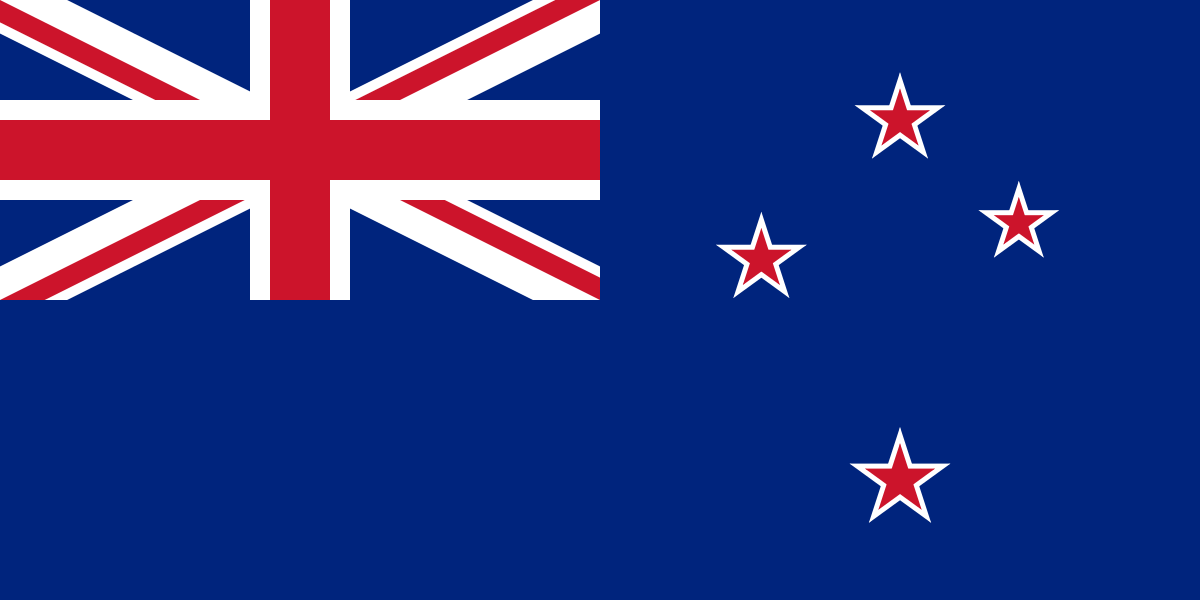
The wine region of Marlborough is located in the region of South Island of New Zealand. We currently count 1237 estates and châteaux in the of Marlborough, producing 3419 different wines in conventional, organic and biodynamic agriculture. The wines of Marlborough go well with generally quite well with dishes .
The wine region of South Island
Central Otago, near the bottom of New Zealand's South Island, vies for the title of world's most southerly wine region. Vineyards cling to the sides of mountains and high above river gorges in this dramatic landscape. Pinot Noir has proven itself in this challenging Terroir, and takes up nearly three-quarters of the region's vineyard area. The typical Central Otago Pinot Noir is intense and deeply colored, with flavors of doris plum, Sweet spice and bramble.
The word of the wine: Lightning
Large capacity barrel.