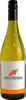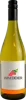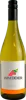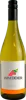
Winery SchäfferFeuersbrunn Blauburger
 wine
wine
This wine generally goes well with
The Feuersbrunn Blauburger of the Winery Schäffer is in the top 0 of wines of Nahe.
Details and technical informations about Winery Schäffer's Feuersbrunn Blauburger.
Discover the grape variety: Grillo
A very ancient grape variety still grown today in western Sicily. Very often associated with catarratto and inzolia, it produces the famous Marsala liqueur wine. It is also increasingly being vinified as a single variety and produces excellent dry wines full of freshness and fruitiness. Grillo is believed to be the result of an intra-fertile cross between catarratto and Muscat of Alexandria or zibibbo, obtained in 1869 by Antonino Mendola. It is represented by two biotypes that can be easily recognized, but it seems that winegrowers attach little importance to them. Little known in other Italian regions - in Liguria it is known as "rossese bianco" - it can also be found in Australia and South Africa. It is not widely grown in France, although it is interesting because of its ability to withstand hot climates and drought, and to ripen quite late.
Informations about the Winery Schäffer
The Winery Schäffer is one of of the world's greatest estates. It offers 3 wines for sale in the of Nahe to come and discover on site or to buy online.

The wine region of Nahe
Nahe is one of the smaller German wine regions, named after the Nahe river which joins the Rhein at Rheinhessen/bingen">Bingen. The viticultural carea here is characterised by dramatic topography with steep slopes and craggy outcrops of metamorphic rock. Like most of the regions on or near the Rhine, its most prestigious wines are made from Riesling. There are around 4,000 hectares (10,000 acres) of Vineyards, spread across seven Grosslagen (wine districts) and over 300 Einzellagen (individual vineyard sites).
The word of the wine: Local wine
Table wine, but with the origin indicated. It corresponds to a particular legislation: the freedom to use grape varieties is greater than for the AOC, but the quality criteria such as the approval tastings can sometimes be more demanding. The legislation is still evolving, but for the moment there are three levels: regional (e.g. Vin de Pays d'Oc), departmental and local (e.g. Côtes de Thongue).