The Winery Ôpia of Vin de France
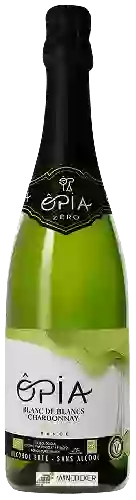
The Winery Ôpia is one of the best wineries to follow in Vin de France.. It offers 5 wines for sale in of Vin de France to come and discover on site or to buy online.
Looking for the best Winery Ôpia wines in Vin de France among all the wines in the region? Check out our tops of the best red, white or effervescent Winery Ôpia wines. Also find some food and wine pairings that may be suitable with the wines from this area. Learn more about the region and the Winery Ôpia wines with technical and enological descriptions.
How Winery Ôpia wines pair with each other generally quite well with dishes of pork, rich fish (salmon, tuna etc) or vegetarian such as recipes of stuffed mushrooms, parillade of fish and seafood or cream and tuna quiche.
On the nose the white wine of Winery Ôpia. often reveals types of flavors of black fruit. In the mouth the white wine of Winery Ôpia. is a powerful.
Vin de France is the most basic level of quality for wines from France. These are generally uncomplicated everyday drinks - most often blends, but perhaps also Varietal wines based on a well-known Grape variety such as Cabernet Sauvignon, Merlot, Chardonnay or Sauvignon Blanc. Wines from France are those that do not meet the criteria stipulated by the Protected Designation of Origin (PDO) or Protected Geographical Indication (PGI) laws (see information on French wine labels). This may be because the vineyards are outside the delimited production areas or because the grape varieties or winemaking techniques used do not conform to the rules of the local appellations.
Although there are some notable exceptions to the rule, most Vin de France wines are produced from high-yielding vines in the South of France (particularly Languedoc-Roussillon), most often from widely planted traditional grape varieties such as Carignan or Merlot. These are light, Fruity wines, intended for early consumption. Many of the wines of France are "bag-in-box" or "box wine" wines, as the economies of scale of cheaper packaging are an attractive option for producers and consumers. There are, however, wines from France of exceptional interest and quality.
How Winery Ôpia wines pair with each other generally quite well with dishes of pasta, vegetarian or appetizers and snacks such as recipes of pasta with lemon and comté cheese, summer tuna quiche or dried tomato, feta and green olive cake.
The white Chardonnay is a grape variety that originated in France (Burgundy). It produces a variety of grape specially used for wine making. It is rare to find this grape to eat on our tables. This variety of grape is characterized by small bunches, and small grapes. White Chardonnay can be found in many vineyards: South West, Burgundy, Jura, Languedoc & Roussillon, Cognac, Bordeaux, Beaujolais, Savoie & Bugey, Loire Valley, Champagne, Rhone Valley, Armagnac, Lorraine, Alsace, Provence & Corsica.
How Winery Ôpia wines pair with each other generally quite well with dishes of beef, lamb or spicy food such as recipes of beef stew provencal style, lamb confit with new potatoes or marinade for chicken brochettes.
Operation that consists in removing the leaves that form a screen between the sun and the grape.
How Winery Ôpia wines pair with each other generally quite well with dishes of pork, rich fish (salmon, tuna etc) or vegetarian such as recipes of veal saltimbocca, grilled tuna with mediterranean marinade or summer tuna quiche.
The white Bouquettraube is a grape variety originating from Germany. It produces a variety of grape specially used for the elaboration of wine. It is rare to find this grape to eat on our tables. This variety of grape is characterized by large bunches and large grapes. The white Bouquettraube can be found cultivated in these vineyards: South-West, Cognac, Bordeaux, Provence & Corsica, Rhone Valley.
Planning a wine route in the of Vin de France? Here are the wineries to visit and the winemakers to meet during your trip in search of wines similar to Winery Ôpia.
An interspecific cross between Zarya Severa (Sayanets Malengra x Amurensis) - a Russian variety - and Saint Laurent, obtained in 1964 by Vilem Kraus (Czech Republic) and then tested at the Geisenheim Research Institute (Germany). It can be found in Germany, Denmark, the Netherlands, Belgium, England, Ireland and Switzerland, but is virtually unknown in France.