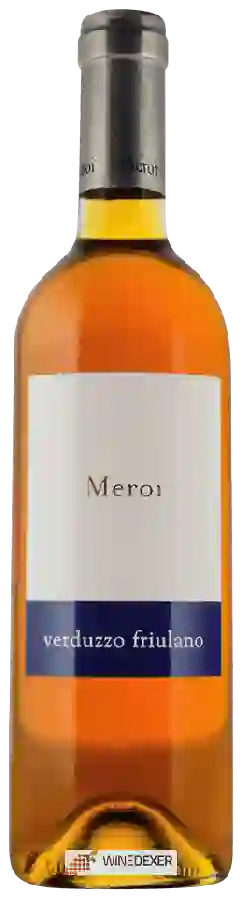
Winery MeroiVerduzzo - Friulano
 Sweet wine



This wine generally goes well with

Wine flavors and olphactive analysis



On the nose the Verduzzo - Friulano of Winery Meroi in the region of Friuli-Venezia Giulia often reveals types of flavors of non oak, earth or oak.
Details and technical informations about Winery Meroi's Verduzzo - Friulano.
Discover the grape variety: Heroldrebe
Light, fruity reds with intense ruby colour, silky tannins and a supple palate, showing simple aromas of red fruits (cherry, raspberry), plum, soft spices and floral notes. A thirst-quenching style to drink young. Now marginal in Germany, preserved for its genetic value in varietal collections and as a parent of Dornfelder (with Helfensteiner). German variety created in 1929 at Weinsberg (Portugieser × Blaufränkisch).
Last vintages of this wine
The best vintages of Verduzzo - Friulano from Winery Meroi are 2011, 0
Informations about the Winery Meroi
The Winery Meroi is one of of the world's great estates. It offers 24 wines for sale in the of Colli Orientali del Friuli to come and discover on site or to buy online.

The wine region of Colli Orientali del Friuli
Reference for great Friulian whites on Flysch hills (marl and sandstone). Signature Friulano (former Tocai): ample, straight whites with notes of fresh almond, pear, white flowers and a slightly bitter finish. Taut, mineral Ribolla Gialla, precise Pinot Grigio, lively Sauvignon (citrus, grass), balanced Chardonnay. Picolit DOCG: rare exceptional sweet wine (honey, dried apricot).
The wine region of Friuli-Venezia Giulia
Italian benchmark of great whites of elegance and minerality. Emblematic Friulano with notes of fresh almond, pear and white flowers, taut Ribolla Gialla, precise Pinot Grigio, lively Sauvignon and balanced Chardonnay. Rare sweet Picolit (DOCG), saline Malvasia Istriana. Rising reds: fruity spicy Refosco, more tannic Pignolo and Schioppettino.
The word of the wine: Deposit
Solid particles that can naturally coat the bottom of a bottle of wine. It is rather a guarantee that the wine has not been mistreated: in fact, to avoid the natural deposit, rather violent processes of filtration or cold passage (- 7 or - 8 °C) are used in order to precipitate the tartar (the small white crystals that some people confuse with crystallized sugar: just taste to dissuade you from it)