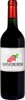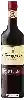
Winery KohlmannVitulon Trcoken
 Red wine
This wine generally goes well with
Details and technical informations about Winery Kohlmann's Vitulon Trcoken.
Discover the grape variety: Canari
The Canary is rarely found in today's vineyards. Its origins are probably in the Pyrenees, precisely in the Ariège. Its repertoire of alternative appellations is vast. Boudalès from the Cévennes becomes folle noire in Fronton. It is also known as chalosse noire, ugne noire or canaril, and can be recognized by its early buds. The very productive vine shows remarkable vigour. Even the black rot does not get the better of this variety. The shoots are covered with foliage, the most exposed parts of which turn red in the autumn. When the grapes reach maturity, which occurs in the second late season, the Canari displays compact, section-shaped bunches of small to medium size. The fins are sometimes very crowded, gathering berries with characteristic colors. The bluish-black shell protects a very juicy flesh. A rather lightly coloured and ordinary wine emerges from the vinification of this variety.
Informations about the Winery Kohlmann
The Winery Kohlmann is one of of the world's greatest estates. It offers 2 wines for sale in the of Saale-Unstrut to come and discover on site or to buy online.

The wine region of Saale-Unstrut
Saale-Unstrut is the northernmost of Germany's 13 wine-growing regions. At 51 degrees northern latitude, it is one of the most northerly wine regions in the world. It takes its name from the two rivers on the banks of which the Vines of the region grow, and is composed of three non-contiguous Parts located mainly in the federal state of Saxony-Anhalt, with around 650 hectares (1600 acres) of Vineyards, often terraced, on South and south-west-facing slopes along the narrow river valleys. A smaller area of 20 hectares (50 acres) is located in the state of Thüringen and a block of just 7 hectares (17 acres) in Brandenburg.
The word of the wine: Food and wine pairing
It is the set of techniques that allow for the pleasant combination of food and wine. Food and wine pairing is based on a few basic principles, such as similarity, complementarity or contrast, and involves all the elements that make up the wine and the food (flavours, textures, aromas, etc.).