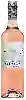
Château La FreynelleL'Aurore du Château la Freynelle Bordeaux Clairet
 wine
wine
This wine generally goes well with
The L'Aurore du Château la Freynelle Bordeaux Clairet of the Château La Freynelle is in the top 0 of wines of Bordeaux Clairet.
Details and technical informations about Château La Freynelle's L'Aurore du Château la Freynelle Bordeaux Clairet.
Discover the grape variety: Caino blanco
Natural intraspecific crossing probably between the albarino and the sousão - synonyms black amaral, caino bravo, ... -. It should not be confused with the fernao pires as they both have the same synonym alvarinhao. It can be found in the northwest of Spain and in Portugal, more precisely in the Vinhos Verdes region, ... in France it is totally unknown.
Informations about the Château La Freynelle
The Château La Freynelle is one of of the world's greatest estates. It offers 6 wines for sale in the of Bordeaux Clairet to come and discover on site or to buy online.

The wine region of Bordeaux Clairet
BordeauxClairet wines are very colourful and distinctive Bordeaux rosé wines. As you might expect, they are made from the classic red Bordeaux grapes - mainly Merlot with a little help from the more "Serious" Cabernet Sauvignon and Cabernet Franc. Despite their intense Color and Rich, FruityAroma, the wines are still Dry. With their simple structure and lack of tannin (an essential ingredient in the wine maturation process), Bordeaux Clairet wines are not suitable for aging.
The wine region of Bordeaux
Bordeaux, in southwestern France, is one of the most famous, prestigious and prolific wine regions in the world. The majority of Bordeaux wines (nearly 90% of the production Volume) are the Dry, medium and Full-bodied red Bordeaux blends for which it is famous. The finest (and most expensive) are the wines of the great châteaux of Haut-Médoc and the right bank appellations of Saint-Émilion and Pomerol. The former focuses (at the highest level) on Cabernet Sauvignon, the latter on Merlot.
The word of the wine: Bleeding
Old practice for red wines. As soon as the vat is filled with grapes, the tap is opened. A sweet but clear juice escapes from the vat (it can also be used to make rosé). The colour and density of the juice is enhanced, but it should not be overdone. Rarely more than 10% of the volume of a vat, otherwise you risk losing fruit and bringing in bitterness.