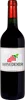
Winery Fasti VenetiLa Pieve Cabernet delle Venezie
 wine
wine
This wine generally goes well with
The La Pieve Cabernet delle Venezie of the Winery Fasti Veneti is in the top 0 of wines of delle Venezie.
Details and technical informations about Winery Fasti Veneti's La Pieve Cabernet delle Venezie.
Discover the grape variety: Brachetto
A very old vine cultivated in the northwest of Italy, in Piedmont to be precise (provinces of Asti and Allessandria). For a long time it was confused with a large number of other Italian grape varieties, which explains why the latter still bear the synonym "brachetto". It is said to be related to the Muscat à petits grains blancs, to be continued! Note that Brachet, known in the Nice region (Alpes maritimes), is not related to Brachetto. Brachetto can be found in Argentina, Italy, etc. It is virtually unknown in France.
Informations about the Winery Fasti Veneti
The Winery Fasti Veneti is one of of the world's greatest estates. It offers 3 wines for sale in the of delle Venezie to come and discover on site or to buy online.

The wine region of delle Venezie
The wine region of delle Venezie is located in the region of Vénétie of Italy. We currently count 1204 estates and châteaux in the of delle Venezie, producing 2235 different wines in conventional, organic and biodynamic agriculture. The wines of delle Venezie go well with generally quite well with dishes .
The wine region of Veneto
Veneto is an important and growing wine region in northeastern Italy. Veneto is administratively Part of the Triveneto area, aLong with its smaller neighbors, Trentino-Alto Adige and Friuli-Venezia Giulia. In terms of geography, culture and wine styles, it represents a transition from the Alpine and Germanic-Slavic end of Italy to the warmer, drier, more Roman lands to the South. Veneto is slightly smaller than the other major Italian wine regions - Piedmont, Tuscany, Lombardy, Puglia and Sicily - but it produces more wine than any of them.
The word of the wine: Chaptalization
The addition of sugar at the time of fermentation of the must, an ancient practice, but theorized by Jean-Antoine Chaptal at the dawn of the 19th century. The sugar is transformed into alcohol and allows the natural degree of the wine to be raised in a weak or cold year, or - more questionably - when the winegrower has a harvest that is too large to obtain good maturity.