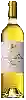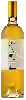
Winery Fargues de LangonDomain Petit de l'Eglise Clos Fontaine Sauternes
 Sweet wine
This wine generally goes well with fruity desserts and blue cheese.

Food and wine pairings with Domain Petit de l'Eglise Clos Fontaine Sauternes
Pairings that work perfectly with Domain Petit de l'Eglise Clos Fontaine Sauternes

Original food and wine pairings with Domain Petit de l'Eglise Clos Fontaine Sauternes
The Domain Petit de l'Eglise Clos Fontaine Sauternes of Winery Fargues de Langon matches generally quite well with dishes of fruity desserts or blue cheese such as recipes of express cherry clafoutis or leek and roquefort tart.
Details and technical informations about Winery Fargues de Langon's Domain Petit de l'Eglise Clos Fontaine Sauternes.
Discover the grape variety: Muscadelle
Aromatic, fruity whites with a tender palate, with intense aromas of muscat, white flowers, honey, candied citrus and floral notes (no genetic link to the muscat family). Minor component in the great botrytised dessert wines of Sauternes, Barsac, Cérons and Monbazillac, adding perfume and freshness. Also dry in Entre-Deux-Mers. Made as sumptuous fortified wines in Australia (Rutherglen Topaque). French variety from Bordeaux and the South-West.
Informations about the Winery Fargues de Langon
The Winery Fargues de Langon is one of of the world's greatest estates. It offers 2 wines for sale in the of Sauternes to come and discover on site or to buy online.

The wine region of Sauternes
Iconic Bordeaux AOC for noble sweet wines, left bank of the Garonne. Golden whites with signature notes of honey, candied apricot, exotic fruit, orange peel, saffron and a finish tightened by chiselled acidity, opulent yet nervy palate — a great age-worthy wine of emotion. Botrytised Semillon dominates (Ciron 'noble rot') concentrating sugars, Sauvignon Blanc adds vivacity, Muscadelle perfume. ~1,416 ha across 5 villages.
The wine region of Bordeaux
World-renowned age-worthy reds, led by round Merlot (plum, black fruit) or firm Cabernet Sauvignon (blackcurrant, cedar, graphite), blended with Cabernet Franc and Petit Verdot for tannic structure. Structured Médoc and Graves, velvety Saint-Émilion and Pomerol. Also crisp dry whites (Sauvignon/Sémillon) and opulent sweet Sauternes with honey and candied fruit. A 110,000 ha Gironde vineyard, 65 appellations, cradle of the 1855 classified growths.
The word of the wine: Rebêche (champagne)
Must obtained in excess of the 2 550 litres authorised for a weight of 4 000 kilos of grapes. The first 2 050 litres constitute the cuvée and the next 500 litres the taille. The rebêche represents 1 to 3 % of the total volume and must be distilled or used to make ratafia.