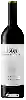
Winery ÁsterClub de Cosecheros
 Red wine


In the mouth this red wine is a powerful with a nice balance between acidity and tannins.
This wine generally goes well with poultry, beef or veal.

Taste structure of the Club de Cosecheros from the Winery Áster
Light | Bold | |
Smooth | Tannic | |
Dry | Sweet | |
Soft | Acidic |
In the mouth the Club de Cosecheros of Winery Áster in the region of Castille-et-Léon is a powerful with a nice balance between acidity and tannins.
Food and wine pairings with Club de Cosecheros
Pairings that work perfectly with Club de Cosecheros



Original food and wine pairings with Club de Cosecheros

The Club de Cosecheros of Winery Áster matches generally quite well with dishes of beef, pasta or veal such as recipes of pork chops with potatoes, italian pasta or veal roast, country style.
Details and technical informations about Winery Áster's Club de Cosecheros.
Discover the grape variety: Villard noir
Colored, fruity reds with an intense ruby robe, smooth tannins and a supple palate, with simple aromas of red fruits (cherry, raspberry), soft spices and hybrid notes. Productive, disease-resistant profile for early drinking. Now marginal in France, surviving in a few heritage plots and varietal collections, important in post-phylloxera reconstruction. French black hybrid obtained by Bertille Seyve at Bourgoin-Jallieu (Seyve-Villard 18-315).
Last vintages of this wine

The best vintages of Club de Cosecheros from Winery Áster are 0, 2011
Informations about the Winery Áster
The Winery Áster is one of of the world's greatest estates. It offers 15 wines for sale in the of Ribera del Duero to come and discover on site or to buy online.

The wine region of Ribera del Duero
Cradle of great modern Spanish reds: Tempranillo (95% of the vineyard, here Tinto Fino) powerful, deep and elegant with notes of black cherry, blackberry, candied plum, leather, cedar and spices, firm tannins and sustained acidity thanks to altitude (720-1100 m). Classification by age: Crianza, Reserva, Gran Reserva. Harsh continental climate, clay-limestone soils. DO since 1982, 19,000 ha in Castilla y León.
The wine region of Castille-et-Léon
Cradle of great Castilian reds on high-altitude plateaus (450-1000 m) of the Duero. Tempranillo king (Tinto Fino, Tinta de Toro): powerful, structured reds with notes of black cherry, blackberry, plum, leather and spices, firm tannins and length worthy of long ageing. Stars: Ribera del Duero (Vega Sicilia, Pingus), fleshy Toro, Bierzo (fresh mineral Mencía). Lively herbaceous Verdejo whites from Rueda, cut grass and citrus.
The word of the wine: Maceration
Prolonged contact and exchange between the juice and the grape solids, especially the skin. Not to be confused with the time of fermentation, which follows maceration. The juice becomes loaded with colouring matter and tannins, and acquires aromas. For a rosé, the maceration is short so that the colour does not "rise" too much. For white wines too, a "pellicular maceration" can be practised, which allows the wine to acquire more fat.