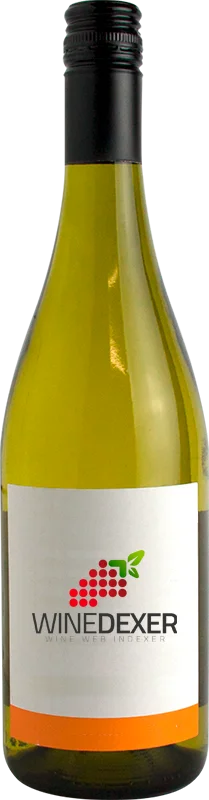
Winery Dynamite VineyardsSauvignon Blanc
 White wine
In the mouth this white wine is a with a nice freshness.
This wine generally goes well with vegetarian, shellfish or goat cheese.

Taste structure of the Sauvignon Blanc from the Winery Dynamite Vineyards
Light | Bold | |
Dry | Sweet | |
Soft | Acidic |
In the mouth the Sauvignon Blanc of Winery Dynamite Vineyards in the region of California is a with a nice freshness.
Food and wine pairings with Sauvignon Blanc
Pairings that work perfectly with Sauvignon Blanc


Original food and wine pairings with Sauvignon Blanc
The Sauvignon Blanc of Winery Dynamite Vineyards matches generally quite well with dishes of shellfish, vegetarian or goat cheese such as recipes of armorican-style squid, spinach and goat cheese quiche or goat cheese and chorizo quiche.
Details and technical informations about Winery Dynamite Vineyards's Sauvignon Blanc.
Discover the grape variety: Alicante Bouschet
Intensely coloured, supple reds with an ink-dark robe, smooth tannins and an ample palate of blackfruit (blackberry, blackcurrant), candied cherry, plum, spices and sunny notes. A teinturier grape with red pulp that deepens colour in southern blends; also a star as a single varietal in Alentejo DOC. Grown in Languedoc, Spain and California. French hybrid created in 1866 by Henri Bouschet (petit bouschet × grenache).
Informations about the Winery Dynamite Vineyards
The Winery Dynamite Vineyards is one of of the world's greatest estates. It offers 13 wines for sale in the of Central Coast to come and discover on site or to buy online.

The wine region of Central Coast
Vast Californian coast (450 km) cooled by Pacific fogs. Cradle of great coastal Pinots and Chardonnays: fine silky Pinot Noir (cherry, raspberry, undergrowth) on Sta. Rita Hills, Santa Maria and Santa Lucia Highlands; ample taut Chardonnay, yellow fruit and saline minerality. Also spicy peppery Syrah, structured Cabernet and jammy Zinfandel on Paso Robles.
The wine region of California
Powerful, sunny reds: dense Napa Cabernet Sauvignon (blackcurrant, chocolate, tobacco, ample tannins), spicy, jammy Zinfandel from the Sierra Foothills, silky red-fruited Pinot Noir on the cool coast (Sonoma, Russian River, Central Coast). Opulent, buttery Chardonnay, notes of yellow fruit and vanilla. Varied climate, from the hot interior to the Pacific-cooled coast. 80% of US production, 139 AVAs including Napa (1st AVA, 1981).
The word of the wine: Thinning out
Operation consisting in eliminating the suckers that grow on the vine stocks.






