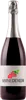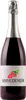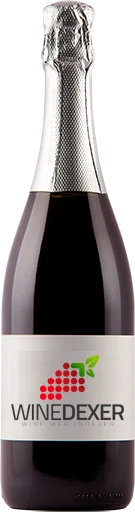
Winery Le 7 TorriFalanghina Beneventana Frizzante
 Sparkling wine
This wine generally goes well with
Details and technical informations about Winery Le 7 Torri's Falanghina Beneventana Frizzante.
Discover the grape variety: Cabernet blanc
Interspecific cross between Cabernet Sauvignon and a long-unknown grape variety - that would be Regent - obtained in 1991 by Valentin Blattner from Soyhières (Switzerland) and propagated by Volker Freytag (Germany). No resistance gene has been identified to either mildew or powdery mildew. Cabernet blanc can be found in Switzerland, Belgium, the Netherlands, Germany, Austria, Luxembourg, the Czech Republic, Italy, England, etc., but is still little known in France.
Informations about the Winery Le 7 Torri
The Winery Le 7 Torri is one of of the world's greatest estates. It offers 6 wines for sale in the of Falanghina del Beneventano to come and discover on site or to buy online.

The wine region of Falanghina del Beneventano
The wine region of Falanghina del Beneventano is located in the region of Campanie of Italy. Wineries and vineyards like the Domaine Tombacco or the Domaine Gran Passione produce mainly wines white, red and sparkling. The most planted grape varieties in the region of Falanghina del Beneventano are Aglianico, Merlot and Cabernet-Sauvignon, they are then used in wines in blends or as a single variety. On the nose of Falanghina del Beneventano often reveals types of flavors of cream, black fruit or apricot and sometimes also flavors of tropical fruit, blackcurrant jam or dried fruit.
The wine region of Campania
Campania is a region that forms the "tibia" of the boot of Italy, and whose largest city is Naples. Its name comes from Campania felix, a Latin phrase meaning roughly "happy land". The region has strong historical links with wine and vineyards, dating back to the 12th century BC, and is one of the oldest wine regions in Italy. The considerable influence of ancient empires, including the Greeks, Romans and Byzantines, means that some of the varieties in this region are linked to historical legends.
The word of the wine: Burned
Qualifier, sometimes equivocal, of various odors, ranging from caramel to burnt wood.