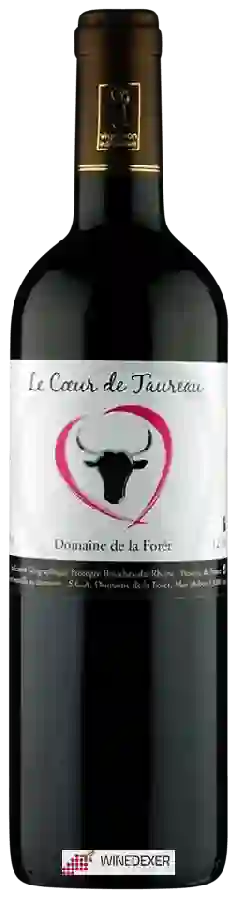
Domaine de la ForêtLe Cœur de Taureau
 Red wine
This wine generally goes well with

Details and technical informations about Domaine de la Forêt's Le Cœur de Taureau.
Discover the grape variety: Gaglioppo
Structured, warm reds with a ruby robe evolving towards garnet, firm tannins and moderate acidity, with aromas of black cherry preserve, plum, fig, Mediterranean herbs (oregano, rosemary), spice, leather and balsamic notes. Ample palate, good ageing. Absolute star of Cirò DOC on the Ionian coast of Calabria (one of Europe's oldest vineyards, celebrated since Antiquity). Autochthonous Calabrian variety, a natural descendant of Sangiovese × Mantonico Bianco.
Informations about the Domaine de la Forêt
The Domaine de la Forêt is one of of the world's greatest estates. It offers 13 wines for sale in the of Bouches-du-Rhone to come and discover on site or to buy online.

The wine region of Bouches-du-Rhone
Provençal departmental IGP around Aix-en-Provence: signature dominant rosés (~50%) with pale robe and signature noses of red fruits or citrus, fresh and accessible. Mediterranean reds (~40%) — spicy Syrah, full-bodied Cabernet Sauvignon, Grenache, Merlot, Cinsault, Carignan and Caladoc in blends, soft round tannins. Whites (~10%) — Ugni, Clairette, Rolle, Bourboulenc and Chardonnay with fresh floral notes. IGP, Mediterranean climate.
The wine region of Méditerranée
Vast IGP of south-east France (Provence, Vaucluse, Var, Corsica, Ardèche), 75% rosés. Fresh, fruity rosés with signature notes of strawberry, raspberry, citrus, white flowers and a Mediterranean touch, taut and thirst-quenching on the palate — the quintessential sunny aperitif. Supple reds blending Grenache, Syrah, Cabernet and Merlot (red fruits, garrigue, spice), full whites of Viognier (apricot, flowers) and Chardonnay. Generous everyday wines, expression of the south.
The word of the wine: Skinny
Thin and lacking in substance in the mouth.