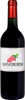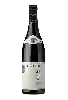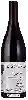
Winery Chevalier ClergetBourgogne Hautes-Côtes de Beaune
 wine
wine
This wine generally goes well with
The Bourgogne Hautes-Côtes de Beaune of the Winery Chevalier Clerget is in the top 0 of wines of Bourgogne Hautes-Côtes de Beaune.
Details and technical informations about Winery Chevalier Clerget's Bourgogne Hautes-Côtes de Beaune.
Discover the grape variety: VB Cal 6-04
Interspecific crossing obtained in Switzerland by Valentin Blattner between Riesling x Sauvignon Blanc and a variety whose name has not yet been communicated and which is resistant to the main cryptogamic diseases. VB Cal 6-04 can be found in Switzerland, Belgium, Germany, etc. In France, a few plantations have been carried out and it is registered in the Official Catalogue of wine grape varieties under the name Sauvignac liste A.
Informations about the Winery Chevalier Clerget
The Winery Chevalier Clerget is one of of the world's greatest estates. It offers 13 wines for sale in the of Bourgogne Hautes-Côtes de Beaune to come and discover on site or to buy online.

The wine region of Bourgogne Hautes-Côtes de Beaune
The wine region of Bourgogne Hautes-Côtes de Beaune is located in the region of Côte de Beaune of Burgundy of France. Wineries and vineyards like the Maison Capitain-Gagnerot or the Domaine Henri Naudin-Ferrand produce mainly wines red and white. The most planted grape varieties in the region of Bourgogne Hautes-Côtes de Beaune are Pinot noir, Chardonnay and Gamay noir, they are then used in wines in blends or as a single variety. On the nose of Bourgogne Hautes-Côtes de Beaune often reveals types of flavors of earth, dried fruit or black cherries and sometimes also flavors of oaky, yellow apple or elderflower.
The wine region of Burgundy
Bourgogne is the catch-all regional appellation title of the Burgundy wine region in eastern France ("Bourgogne" is the French name for Burgundy). Burgundy has a Complex and comprehensive appellation system; counting Premier Cru and Grand Cru titles, the region has over 700 appellation titles for its wines. Thus, Burgundy wines often come from one Vineyard (or several separate vineyards) without an appellation title specific to the region, Village or even vineyard. A standard Burgundy wine may be made from grapes grown in one or more of Burgundy's 300 communes.
The word of the wine: Chaptalization
The addition of sugar at the time of fermentation of the must, an ancient practice, but theorized by Jean-Antoine Chaptal at the dawn of the 19th century. The sugar is transformed into alcohol and allows the natural degree of the wine to be raised in a weak or cold year, or - more questionably - when the winegrower has a harvest that is too large to obtain good maturity.