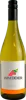
Winery Bernhard Schott SohneWeisser Burgunder Siegerrebe
 wine
wine
This wine generally goes well with
The Weisser Burgunder Siegerrebe of the Winery Bernhard Schott Sohne is in the top 0 of wines of Nahe.
Details and technical informations about Winery Bernhard Schott Sohne's Weisser Burgunder Siegerrebe.
Discover the grape variety: Concord
It is the result of a seedling planted in the United States, around 1840, recovered near the Concord River, a small river located east of Massachusetts. According to genetic analysis, it is an interspecific cross between the catawba and a vitis labrusca. Concord was for a long time the main variety cultivated in North America. It was introduced into Europe at the beginning of the 19th century, in France at the beginning of the phylloxera crisis, but was not widely propagated. It could be found in the Valleraugue region (Gard) at the foot of Mont Aigoual, in the Ardèche (our photos), etc. Today, it exists only as an isolated strain that can sometimes be found on the edge of a slope, which was our case. Through various and numerous crosses, it has been used to obtain some rootstocks and direct producer hybrids, which have now almost all disappeared.
Informations about the Winery Bernhard Schott Sohne
The Winery Bernhard Schott Sohne is one of of the world's greatest estates. It offers 5 wines for sale in the of Nahe to come and discover on site or to buy online.

The wine region of Nahe
Nahe is one of the smaller German wine regions, named after the Nahe river which joins the Rhein at Rheinhessen/bingen">Bingen. The viticultural carea here is characterised by dramatic topography with steep slopes and craggy outcrops of metamorphic rock. Like most of the regions on or near the Rhine, its most prestigious wines are made from Riesling. There are around 4,000 hectares (10,000 acres) of Vineyards, spread across seven Grosslagen (wine districts) and over 300 Einzellagen (individual vineyard sites).
The word of the wine: Bordeaux futures
Bordeaux wines are expected 2 to 3 years before bottling. In the spring following the harvest, the wines are offered by the châteaux to the Bordeaux wine merchants via the brokers.