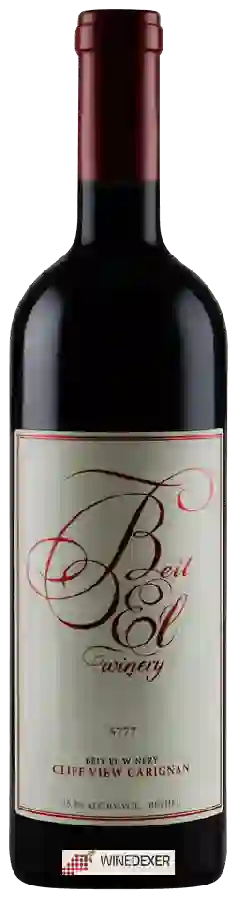
Winery The Beit ElCliff View Carignan
 Red wine


This wine generally goes well with beef and spicy food.

Wine flavors and olphactive analysis


On the nose the Cliff View Carignan of Winery The Beit El in the region of Judean Hills often reveals types of flavors of non oak, oak or spices and sometimes also flavors of black fruit, dried fruit.
Food and wine pairings with Cliff View Carignan
Pairings that work perfectly with Cliff View Carignan


Original food and wine pairings with Cliff View Carignan
The Cliff View Carignan of Winery The Beit El matches generally quite well with dishes of beef or spicy food such as recipes of oxtail with seed sauce or pasta with broccoli.
Details and technical informations about Winery The Beit El's Cliff View Carignan.
Discover the grape variety: Optima
Aromatic, full-bodied whites with a pale golden robe, a supple palate and moderate acidity, showing signature muscat aromas, white flowers (elderflower, acacia), yellow fruits (pear, peach, apricot) and honeyed notes. An early-ripening profile, vinified dry, sweet and botrytised. Grown in Germany (Mosel, Rheinhessen) and England for aromatic white wines. A German variety created in 1929 at Geilweilerhof ((Silvaner × Riesling) × Müller-Thurgau).
Last vintages of this wine

The best vintages of Cliff View Carignan from Winery The Beit El are 2019, 2017, 0, 2016 and 2014.
Informations about the Winery The Beit El
The Winery The Beit El is one of of the world's greatest estates. It offers 13 wines for sale in the of Judean Hills to come and discover on site or to buy online.

The wine region of Judean Hills
Qualitative heart of Israeli wine around Jerusalem, the country's first official AO (2020). Dense, structured reds with signature notes of ripe blackcurrant, blackberry, mint, eucalyptus, Mediterranean herbs and spice, firm tannins and freshness tightened by altitude. Cabernet Sauvignon and Merlot in Bordeaux blends. Also peppery Syrah, dense Petit Verdot.
The word of the wine: Tanin
A natural compound contained in the skin of the grape, the seed or the woody part of the bunch, the stalk. The maceration of red wines allows the extraction of tannins, which give the texture, the solidity and also the mellowness when the tannins are "ripe". The winemaker seeks above all to extract the tannins from the skin, the ripest and most noble. The tannins of the seed or stalk, which are "greener", especially in average years, give the wine hardness and astringency. The wines of Bordeaux (based on Cabernet and Merlot) are full of tannins, those of Burgundy much less so, with Pinot Noir containing little.