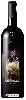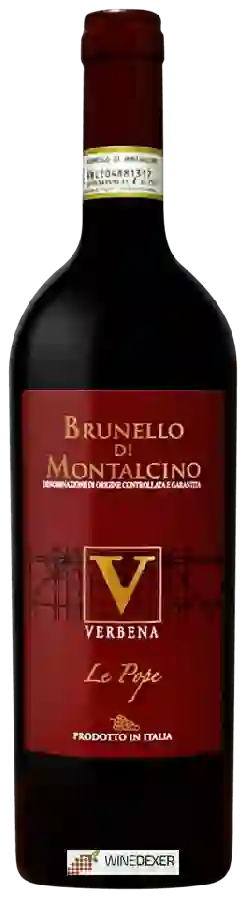
Winery VerbenaLe Pope Brunello di Montalcino
 wine
wine
This wine generally goes well with
The Le Pope Brunello di Montalcino of the Winery Verbena is in the top 0 of wines of Brunello di Montalcino.
Details and technical informations about Winery Verbena's Le Pope Brunello di Montalcino.
Discover the grape variety: Grec rouge
Most likely from the south of France, it is now an endangered variety.
Last vintages of this wine



The best vintages of Le Pope Brunello di Montalcino from Winery Verbena are 2015, 2016, 0
Informations about the Winery Verbena
The Winery Verbena is one of of the world's greatest estates. It offers 6 wines for sale in the of Brunello di Montalcino to come and discover on site or to buy online.

The wine region of Brunello di Montalcino
The wine region of Brunello di Montalcino is located in the region of Toscane of Italy. Wineries and vineyards like the Domaine Soldera or the Domaine Casanova di Neri produce mainly wines red. The most planted grape varieties in the region of Brunello di Montalcino are Sangiovese, they are then used in wines in blends or as a single variety. On the nose of Brunello di Montalcino often reveals types of flavors of iron, potpourri or dried fruit and sometimes also flavors of dried rose, berry jam or rose petal.
The wine region of Tuscany
Tuscany is one of the most famous and prolific wine regions in Europe. It is best known for its Dry red wines made from Sangiovese grapes, which dominate production. These include Chianti, Brunello di Montalcino and Vino Nobile di Montepulciano. The region's Vin Santo is also highly prized, as are its passito dessert wines, though these are produced in comparatively tiny quantities.
The word of the wine: Alcohol content
Quantity of alcohol in wine and in all alcoholic beverages, expressed in degrees or as a percentage.