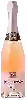
Winery Anson PhilippeCremant De Bourgogne Rose
 wine
wine
This wine generally goes well with
The Cremant De Bourgogne Rose of the Winery Anson Philippe is in the top 0 of wines of Crémant de Bourgogne.

Details and technical informations about Winery Anson Philippe's Cremant De Bourgogne Rose.
Discover the grape variety: Klingelberger
Aromatic and mineral whites of great ageing potential, with a pale golden colour, a taut palate with vibrant acidity and signature aromas of citrus (lemon, grapefruit), green apple, flint, white flowers and petrol notes at maturity. Also as botrytised Spätlese, Auslese and Eiswein. Produces great whites in German Baden, a typical expression of Durbach and Schloss Staufenberg. Synonym of Riesling used in Germany (Baden, Durbach).
Informations about the Winery Anson Philippe
The Winery Anson Philippe is one of of the world's greatest estates. It offers 2 wines for sale in the of Crémant de Bourgogne to come and discover on site or to buy online.

The wine region of Crémant de Bourgogne
Traditional-method sparkling, a direct alternative to Champagne. Fine, persistent bubbles, fresh nose of green apple, lemon, white flowers, brioche and almond, taut and elegant palate (9 months minimum on lees, often 12-24). Based on Chardonnay (freshness and finesse) and Pinot Noir (roundness and red fruits), sometimes Aligoté, Gamay and Melon. Blanc de Blancs, Blanc de Noirs and fleshy rosé versions (strawberry, raspberry).
The wine region of Burgundy
Absolute reference for great terroir wines: opulent, mineral Chardonnay in whites (chiselled Chablis, buttery Meursault, majestic Montrachet), fine and silky Pinot Noir in reds (full-bodied Gevrey, structured Pommard, delicate Volnay). Exceptional age-worthy wines with complex notes - red fruits, undergrowth, butter, hazelnut. Some lively Aligoté and light Gamay (Mâconnais). 29,500 ha, 84 tiered AOCs (Régionale, Village, 1er Cru, Grand Cru), 1,247 UNESCO Climats.
The word of the wine: AOC
Appellation d'origine contrôlée. The most prestigious category of French wines created in the 1930s on the basis of quality criteria defined by a geographical delimitation, a chosen grape variety and precise production rules.