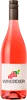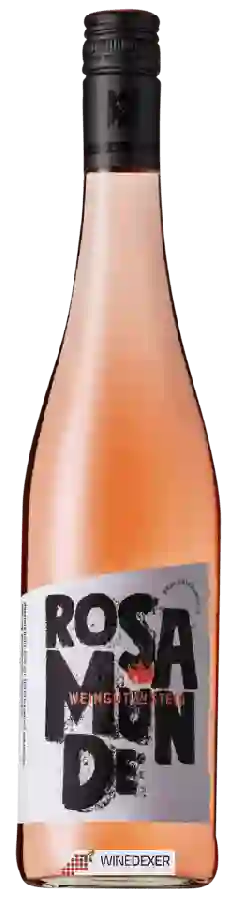
Winery Am SteinRosamunde
 Pink wine



This wine generally goes well with vegetarian

Wine flavors and olphactive analysis


On the nose the Rosamunde of Winery Am Stein in the region of Franken often reveals types of flavors of red fruit, floral.
Food and wine pairings with Rosamunde
Pairings that work perfectly with Rosamunde

Original food and wine pairings with Rosamunde
The Rosamunde of Winery Am Stein matches generally quite well with dishes of vegetarian such as recipes of quiche without pastry, courgette and blue cheese.
Details and technical informations about Winery Am Stein's Rosamunde.
Discover the grape variety: Cortese
Lively, structured whites with firm acidity and a slender mouth, featuring aromas of citrus (lemon, grapefruit), green apple, white flowers, fresh almond and chalky mineral notes. Typically saline finish. The absolute star of Gavi DOCG (Cortese di Gavi), one of Italy's great whites, also made as sparkling wines and aged cuvées. Present in Colli Tortonesi DOC and Lombardy. Native Piedmontese grape from the southeast, with a long tradition of noble whites.
Last vintages of this wine
The best vintages of Rosamunde from Winery Am Stein are 2017, 2016, 0, 2018
Informations about the Winery Am Stein
The Winery Am Stein is one of of the world's great estates. It offers 75 wines for sale in the of Franken to come and discover on site or to buy online.

The wine region of Franken
Homeland of German Silvaner: dry, straight, mineral and lively whites with notes of green apple, citrus, fresh herbs and a saline touch, planted here for over 350 years (1,500 ha, a quarter of the vineyard). Also supple, floral Müller-Thurgau, taut Riesling, aromatic Bacchus. Some discreet reds (Spätburgunder). 6,040 ha in Bavaria along the Main around Würzburg, red sandstone and shell-limestone soils.
The word of the wine: Serious
A Bordeaux term for small pebbles from the Pyrenees, eroded, rounded and transported by the Garonne to Aquitaine. They are mainly found on the left bank in the area.... known as the Graves, and further downstream in the Médoc. By extension, gravel is found in other regions, brought by other rivers or even glaciers.