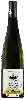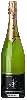
Winery Theo MeyerCrémant d'Alsace Brut
 wine
wine
This wine generally goes well with
The Crémant d'Alsace Brut of the Winery Theo Meyer is in the top 0 of wines of Crémant d'Alsace.
Details and technical informations about Winery Theo Meyer's Crémant d'Alsace Brut.
Discover the grape variety: Cabernet franc
Cabernet Franc is one of the oldest red grape varieties in Bordeaux. The Libourne region is its terroir where it develops best. The terroirs of Saint-Emilion and Fronsac allow it to mature and develop its best range of aromas. It is also the majority in many blends. The very famous Château Cheval Blanc, for example, uses 60% Cabernet Franc. The wines produced with Cabernet Franc are medium in colour with fine tannins and subtle aromas of small red fruits and spices. When blended with Merlot and Cabernet Sauvignon, it brings complexity and a bouquet of aromas to the wine. It produces fruity wines that can be drunk quite quickly, but whose great vintages can be kept for a long time. It is an earlier grape variety than Cabernet Sauvignon, which means that it is planted as far north as the Loire Valley. In Anjou, it is also used to make sweet rosé wines. Cabernet Franc is now used in some twenty countries in Europe and throughout the world.
Informations about the Winery Theo Meyer
The Winery Theo Meyer is one of of the world's great estates. It offers 20 wines for sale in the of Crémant d'Alsace to come and discover on site or to buy online.

The wine region of Crémant d'Alsace
Crémant d'Alsace is the appellation for white and rosé Sparkling wines from the Alsace wine region in northeastern France. Introduced in August 1976, the appellation now accounts for about a quarter of the region's production, or about 45 million bottles per year, up from 31 million in 2009. Outside of Champagne (240km to the west), it is the dominant French sparkling wine appellation, with more than half of all crémant production. The cooperatives are the most important players, with Wolfberger alone producing 6 to 7 million bottles.
The wine region of Alsace
Alsace, located in the extreme north-east of France, is Distinguished from other French wine regions by its strong Franco-Germanic influences. These influences are the result of a back-and-forth between the German and French sovereignties over the last few centuries. They can be seen not only in the architecture and culture of Alsace, but also in the wines. Alsace wines are produced under three main appellations: Alsace and Alsace Grand Cru for still white wines (Sweet and Dry), and Crémant d'Alsace for Sparkling wines.
The word of the wine: Bright
Said of a wine whose acidity is the dominant characteristic, making it fresh and nervous.