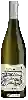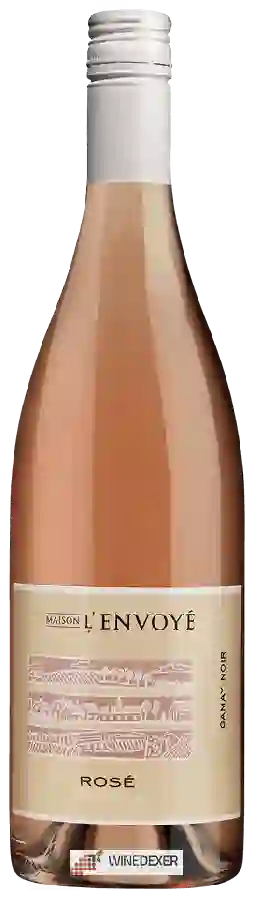
Maison l'EnvoyeLe Saint Pâle Rosé
 Pink wine


This wine generally goes well with
The Le Saint Pâle Rosé of the Maison l'Envoye is in the top 30 of wines of Beaujolais.
Wine flavors and olphactive analysis


On the nose the Le Saint Pâle Rosé of Maison l'Envoye in the region of Beaujolais often reveals types of flavors of cherry, grapefruit or minerality and sometimes also flavors of strawberries, perfume or earth.
Details and technical informations about Maison l'Envoye's Le Saint Pâle Rosé.
Discover the grape variety: Rousse
It is said to have originated in the Vallée du Gier, south-west of Lyon, and is found only in this region, like the Mornen, with which it has long been associated. It disappeared from the vineyard a long time ago, but is currently being recognized thanks to the association for the restoration and development of the Coteaux du Gier vineyard (A.R.D.V.C.G). A few vines still remain in a mixture in very old plots.
Last vintages of this wine
The best vintages of Le Saint Pâle Rosé from Maison l'Envoye are 2016, 2019, 2018, 2017
Informations about the Maison l'Envoye
The Maison l'Envoye is one of of the world's greatest estates. It offers 18 wines for sale in the of Beaujolais to come and discover on site or to buy online.

The wine region of Beaujolais
Beaujolais is an important wine region in eastern France, famous for its vibrant, Fruity red wines made from Gamay. It is located immediately South of Burgundy, of which it is sometimes considered a Part, although it is in the administrative region of Rhône. The extensive plantings of Gamay in this region make Beaujolais one of the few regions in the world that is so concentrated on a single Grape variety. Pinot Noir is used in small quantities in red and rosé wines, but in the name of regional identity, it is being phased out and will only be allowed until the 2015 harvest.
The word of the wine: Rootstock
American vine on which a French vine is grafted. This is the consequence of the phylloxera that destroyed the vineyard at the end of the 19th century: after much trial and error, it was discovered that the "pest" spared the roots of the American vines, and the technique became widespread.