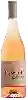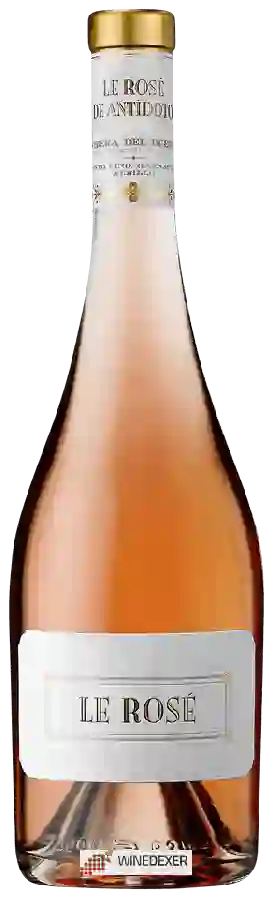
Winery AntídotoLe Rosé
 Pink wine


This wine generally goes well with

Wine flavors and olphactive analysis

On the nose the Le Rosé of Winery Antídoto in the region of Castille-et-Léon often reveals types of flavors of tree fruit, red fruit.
Details and technical informations about Winery Antídoto's Le Rosé.
Discover the grape variety: Canner seedless
Table grape with long clusters and seedless golden berries, thin skin and crunchy flesh, neutral sweet flavour. Early ripening. Very rarely vinified. Grown in California, Australia and Chile for export markets, prized for its attractive appearance, pleasant taste and good cold-storage life. American seedless white table grape variety bred for fresh consumption.
Last vintages of this wine

The best vintages of Le Rosé from Winery Antídoto are 2016, 2015, 2014, 0 and 2017.
Informations about the Winery Antídoto
The Winery Antídoto is one of of the world's greatest estates. It offers 5 wines for sale in the of Ribera del Duero to come and discover on site or to buy online.

The wine region of Ribera del Duero
Cradle of great modern Spanish reds: Tempranillo (95% of the vineyard, here Tinto Fino) powerful, deep and elegant with notes of black cherry, blackberry, candied plum, leather, cedar and spices, firm tannins and sustained acidity thanks to altitude (720-1100 m). Classification by age: Crianza, Reserva, Gran Reserva. Harsh continental climate, clay-limestone soils. DO since 1982, 19,000 ha in Castilla y León.
The wine region of Castille-et-Léon
Cradle of great Castilian reds on high-altitude plateaus (450-1000 m) of the Duero. Tempranillo king (Tinto Fino, Tinta de Toro): powerful, structured reds with notes of black cherry, blackberry, plum, leather and spices, firm tannins and length worthy of long ageing. Stars: Ribera del Duero (Vega Sicilia, Pingus), fleshy Toro, Bierzo (fresh mineral Mencía). Lively herbaceous Verdejo whites from Rueda, cut grass and citrus.
The word of the wine: Discharge
Action consisting of removing suspended particles (sludge) from the must.