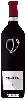
Winery Finca VillacrecesCrianza
 wine
wine
This wine generally goes well with
The Crianza of the Winery Finca Villacreces is in the top 0 of wines of Ribera del Duero.

Details and technical informations about Winery Finca Villacreces's Crianza.
Discover the grape variety: Corinto Nero
Small, intensely coloured seedless grapes, mainly destined for raisin production. More rarely vinified into confidential sweet and liqueur wines from the Aeolian Islands, with a dark colour, luscious palate and aromas of candied black fruit, raisins and spices. Grown in the Cyclades (island of Lipari) and southern Italy. A seedless mutation of the Corinth raisin, an ancient Greek black variety.
Informations about the Winery Finca Villacreces
The Winery Finca Villacreces is one of of the world's great estates. It offers 14 wines for sale in the of Ribera del Duero to come and discover on site or to buy online.

The wine region of Ribera del Duero
Cradle of great modern Spanish reds: Tempranillo (95% of the vineyard, here Tinto Fino) powerful, deep and elegant with notes of black cherry, blackberry, candied plum, leather, cedar and spices, firm tannins and sustained acidity thanks to altitude (720-1100 m). Classification by age: Crianza, Reserva, Gran Reserva. Harsh continental climate, clay-limestone soils. DO since 1982, 19,000 ha in Castilla y León.
The wine region of Castille-et-Léon
Cradle of great Castilian reds on high-altitude plateaus (450-1000 m) of the Duero. Tempranillo king (Tinto Fino, Tinta de Toro): powerful, structured reds with notes of black cherry, blackberry, plum, leather and spices, firm tannins and length worthy of long ageing. Stars: Ribera del Duero (Vega Sicilia, Pingus), fleshy Toro, Bierzo (fresh mineral Mencía). Lively herbaceous Verdejo whites from Rueda, cut grass and citrus.
The word of the wine: Oenologist
Specialist in wine-making techniques. It is a profession and not a passion: one can be an oenophile without being an oenologist (and the opposite too!). Formerly attached to the Faculty of Pharmacy, oenology studies have become independent and have their own university course. Learning to make wine requires a good chemical background but also, increasingly, a good knowledge of the plant. Some oenologists work in laboratories (analysis). Others, the consulting oenologists, work directly in the properties.