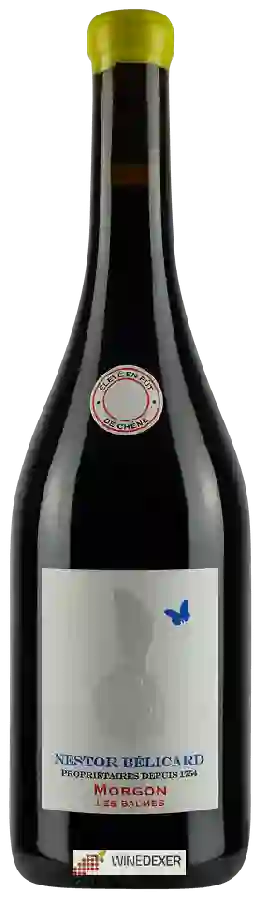
Domaine Nestor BélicardMorgon Les Balmes
 wine
wine
This wine generally goes well with
The Morgon Les Balmes of the Domaine Nestor Bélicard is in the top 0 of wines of Morgon.

Details and technical informations about Domaine Nestor Bélicard's Morgon Les Balmes.
Discover the grape variety: Muscardin
Light, fresh reds with a clear ruby hue, rounded tannins and an elegant palate, with delicate aromas of red fruits (raspberry, cherry), soft spices, garrigue herbs and floral notes. Airy profile adding freshness to warm Rhône blends. Traditional component of Châteauneuf-du-Pape AOC (one of 13 authorised varieties) and Côtes du Rhône AOC. Rare native French variety from the southern Rhône Valley, a witness to Rhodanian heritage.
Informations about the Domaine Nestor Bélicard
The Domaine Nestor Bélicard is one of of the world's greatest estates. It offers 4 wines for sale in the of Morgon to come and discover on site or to buy online.

The wine region of Morgon
The most powerful and structured of the ten Beaujolais Crus. Dense, deep reds with signature notes of ripe black cherry, kirsch, stewed plum, faded flowers and spice, firm tannins and notable ageing (5-10 years) — the antithesis of primeur Beaujolais; they are said to "morgonner", evolving towards Burgundian Pinot Noir. Unique decomposed schist soils ("rotten rock") of the Côte du Py. ~1,100 ha, six climats.
The wine region of Beaujolais
Kingdom of Gamay (98% of the vineyard): fruity, accessible reds with signature notes of cherry, raspberry, banana (carbonic maceration), violet and sweet spices, supple tannins and juicy acidity. From festive Beaujolais Nouveau (3rd Thursday of November) to the 10 more structured, age-worthy Crus: deep earthy Morgon, sturdy Moulin-à-Vent, floral Fleurie, crunchy Brouilly. Some lively Chardonnay. 12,000 ha south of Burgundy, granitic soils.
The word of the wine: Ice wine
Sweet wine obtained by pressing frozen berries harvested in the middle of winter.








