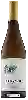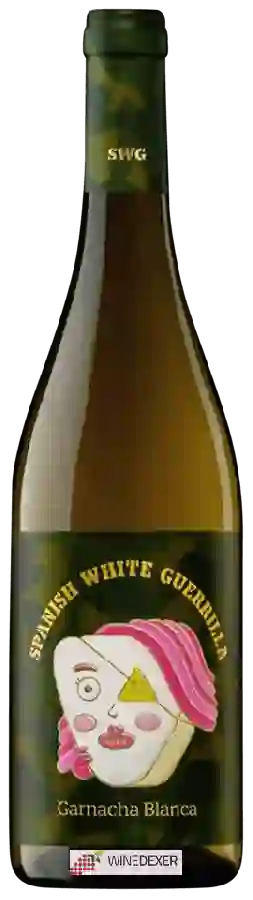
Winery Castillo de MaetierraSpanish White Guerrilla Garnacha Blanca
 White wine
This wine generally goes well with
The Spanish White Guerrilla Garnacha Blanca of the Winery Castillo de Maetierra is in the top 20 of wines of Valles de Sadacia.
Details and technical informations about Winery Castillo de Maetierra's Spanish White Guerrilla Garnacha Blanca.
Discover the grape variety: Morrastel-Bouschet
Obtained in 1885 by Henri Bouschet by crossing the morrastel and the petit Bouschet. Today, it is no longer multiplied and is therefore in danger of extinction.
Informations about the Winery Castillo de Maetierra
The Winery Castillo de Maetierra is one of of the world's great estates. It offers 27 wines for sale in the of Valles de Sadacia to come and discover on site or to buy online.

The wine region of Valles de Sadacia
The wine region of Valles de Sadacia is located in the region of Navarre of Spain. Wineries and vineyards like the Domaine Castillo de Maetierra or the Domaine Castillo de Maetierra produce mainly wines white, pink and red. The most planted grape varieties in the region of Valles de Sadacia are Chardonnay, Viognier and Riesling, they are then used in wines in blends or as a single variety. On the nose of Valles de Sadacia often reveals types of flavors of earth, tree fruit or citrus fruit and sometimes also flavors of floral, tropical fruit or red fruit.
The wine region of Navarre
Navarra, in northern Spain, is one of the country's 17 first-level administrative regions (comunidades autónomas) and a fairly prolific, if lesser-known, wine region. Traditionally associated with the production of Bright, Fruity rosé, Navarra is beginning to attract attention for its high-quality red wines, mainly from the Tempranillo, Cabernet Sauvignon and Merlot grapes, after years of being overshadowed by its southern neighbor, Rioja. The first evidence of wine-making in the region dates back to Roman times, but it is almost certain that Vines were growing here Long before that. It was recently discovered that vines of the prehistoric species Vitis sylvestris - the predecessor of the beloved Vitis vinifera - were still growing in Navarre.
The word of the wine: Aqueous
Said of a diluted wine for which one has the impression that water has been added.