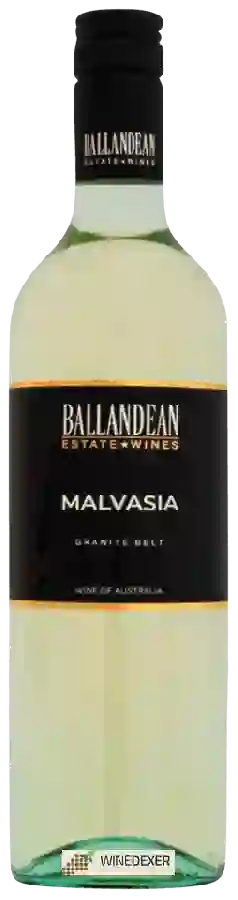
Winery BallandeanMalvasia
 White wine
This wine generally goes well with
Wine flavors and olphactive analysis


On the nose the Malvasia of Winery Ballandean in the region of Queensland often reveals types of flavors of tree fruit.
Details and technical informations about Winery Ballandean's Malvasia.
Discover the grape variety: Amigne
A very old vine cultivated in the Swiss Valais, more precisely in Vétroz. The latest genetic analyses, to be confirmed however, show that it would be related to the petit meslier and in fact to the gouais and the savagnin. It should be noted that it is only known in its country and region of origin.
Informations about the Winery Ballandean
The Winery Ballandean is one of of the world's great estates. It offers 39 wines for sale in the of Granite Belt to come and discover on site or to buy online.

The wine region of Granite Belt
The wine region of Granite Belt is located in the region of Queensland of Australia. Wineries and vineyards like the Domaine Bent Road or the Domaine Mount Tamborine produce mainly wines red, white and pink. The most planted grape varieties in the region of Granite Belt are Cabernet-Sauvignon, Chardonnay and Viognier, they are then used in wines in blends or as a single variety. On the nose of Granite Belt often reveals types of flavors of non oak, earth or oak and sometimes also flavors of spices, black fruit or microbio.
The wine region of Queensland
Queensland is one of six states and two "territories" that make up the Commonwealth of Australia. It covers approximately 1. 85 million square kilometres (715,300 square miles) in the north-eastern quarter of the "island continent". Although far from being renowned for its wine, Queensland has a growing wine industry, responding to a growing global demand and the happy combination of tourism and wine.
The word of the wine: Courgée
Name of the fruiting branch left after pruning and which is then arched along the trellis in the Jura (in the Mâconnais, it is called the tail).