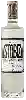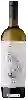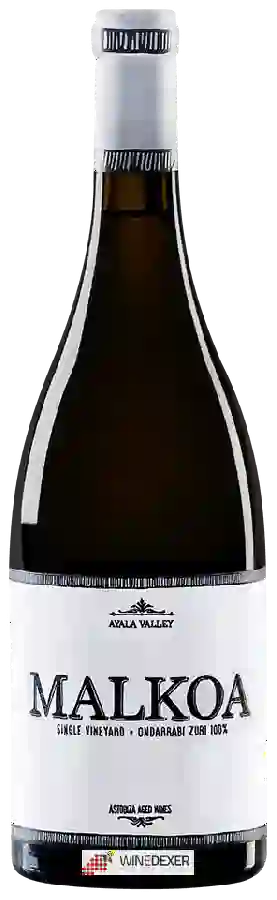
Winery AstobizaMalkoa Single Vineyard Ondarrabi Zuri
 White wine



This wine generally goes well with
The Malkoa Single Vineyard Ondarrabi Zuri of the Winery Astobiza is in the top 10 of wines of Arabako Txakolina.

Wine flavors and olphactive analysis




On the nose the Malkoa Single Vineyard Ondarrabi Zuri of Winery Astobiza in the region of El Pais Vasco often reveals types of flavors of microbio, oak or tree fruit and sometimes also flavors of citrus fruit.
Details and technical informations about Winery Astobiza's Malkoa Single Vineyard Ondarrabi Zuri.
Discover the grape variety: Mandó
Supple, fruity reds with a clear ruby robe, silky tannins and an airy palate, with signature aromas of red fruits (cherry, raspberry), Mediterranean herbs (thyme, rosemary) and Levantine garrigue notes. A rustic, airy, near-extinct profile. Preserved for its heritage value, it is among the Levantine native grapes under study. Near-extinct native Spanish black grape from Valencia and Alicante.
Last vintages of this wine
The best vintages of Malkoa Single Vineyard Ondarrabi Zuri from Winery Astobiza are 2016, 2015, 0
Informations about the Winery Astobiza
The Winery Astobiza is one of of the world's greatest estates. It offers 11 wines for sale in the of Arabako Txakolina to come and discover on site or to buy online.

The wine region of Arabako Txakolina
The smallest and most continental of the three Txakoli DOs (2001), nestled in the Ayala valley in Álava, inland. Hondarrabi Zuri is the almost exclusive signature white: dry, light (~11% abv) and taut with lively citrus, green apple, fresh herbs and a stony mineral hint — more marked than saline — incisive acidity and a light prickle. Pronounced thermal swings bringing aromatic finesse. A refreshing seafood wine.
The wine region of El Pais Vasco
Spanish Basque Country (Euskadi) on the Cantabrian coast near Bilbao, humid oceanic climate. Hondarrabi Zuri is the signature white for Txakoli: dry, lively and slightly sparkling with citrus, green apple, white flowers and saline iodine notes, cutting acidity and low alcohol - poured from height to release the pétillant, the pintxos companion. Hondarrabi Beltza for light reds and crisp rosés. Three DOs: Getariako, Bizkaiko and Arabako Txakolina.
The word of the wine: Muscat blanc à petits grains
A white grape variety cultivated since antiquity on the shores of the Mediterranean, it is considered the noblest of the muscats. It is mainly used to make sweet wines, often from mutage. In France, it is the sole variety used in many natural sweet wines: muscat-de-frontignan, muscat-de-mireval, muscat-de-lunel, muscat-de-saint-jean-de-minervois, muscat-de-beaumes-de-venise, muscat-du-cap-corse. Combined with Muscat d'Alexandrie, it gives Muscat-de-Rivesaltes. It is also used to make sparkling white wines (clairette-de-die; moscato d'asti and asti spumante in Italy) and dry wines (alsace-muscat). Powerfully aromatic and complex, its wines evoke fresh grapes, roses, exotic fruits, citrus fruits and spices.